21-Day Gut-Healing Meal Plan: Your Complete Guide to Better Digestion
Your gut isn’t just some food-processing tube. It’s basically mission control for your entire body. Research shows that your gut microbiome contains trillions of bacteria that influence everything from your immune system to your mood. When it’s out of whack, you feel it everywhere.
The good news? You don’t need some expensive detox tea or miracle supplement. You just need real food, a bit of strategy, and three weeks of commitment. Let’s break down exactly how to heal your gut without turning your kitchen into a science lab.
Why Your Gut Needs This Reset (And Why 21 Days Matters)
Here’s the thing about gut health: it’s not built in a day. Your microbiome is like a garden—it needs consistent care, the right nutrients, and time to flourish. The 21-day timeframe isn’t random. Studies suggest that it takes roughly three weeks to start seeing measurable changes in your gut bacteria composition when you shift your diet.
I’ve tried the quick fixes. They don’t work. What does work is giving your body enough time to actually adapt and heal. During these three weeks, you’re going to focus on feeding the good bacteria, starving the bad, and reducing inflammation that’s been quietly sabotaging your digestive system.
Think about it this way: chronic inflammation in your gut doesn’t happen overnight, so healing it won’t either. But commit to this plan, and you’ll start noticing changes—better energy, clearer skin, less bloating, and yeah, probably some weight loss too.
The Science Behind Gut Healing (Without the Boring Lecture)
Your gut lining is only one cell thick. When it’s damaged—from processed foods, stress, antibiotics, or just years of neglect—it becomes “leaky.” This isn’t some woo-woo term; it’s a real condition where partially digested food particles and toxins slip through your intestinal wall into your bloodstream.
The result? Your immune system freaks out. You get inflammation, food sensitivities, brain fog, skin issues, and a whole cascade of problems that seem unrelated but all trace back to your gut.
The fix involves three key strategies:
- Remove inflammatory foods that damage your gut lining
- Replace with healing foods rich in prebiotics, probiotics, and anti-inflammatory compounds
- Repair the gut lining with specific nutrients that support cellular regeneration
We’re talking about real, whole foods here. Fermented vegetables, bone broth, omega-3 fatty acids, and loads of fiber. According to Harvard’s nutrition research, these foods work together to reduce inflammation and support beneficial gut bacteria.
Week 1: The Foundation Phase
The first week is about elimination and establishing new patterns. You’re cutting out the usual suspects: refined sugar, processed foods, alcohol, and anything that comes in a package with ingredients you can’t pronounce.
I know, I know—it sounds brutal. But hear me out. This isn’t forever; it’s just three weeks. And honestly, by day five, you’ll probably stop craving that afternoon candy bar anyway.
What You’re Eating
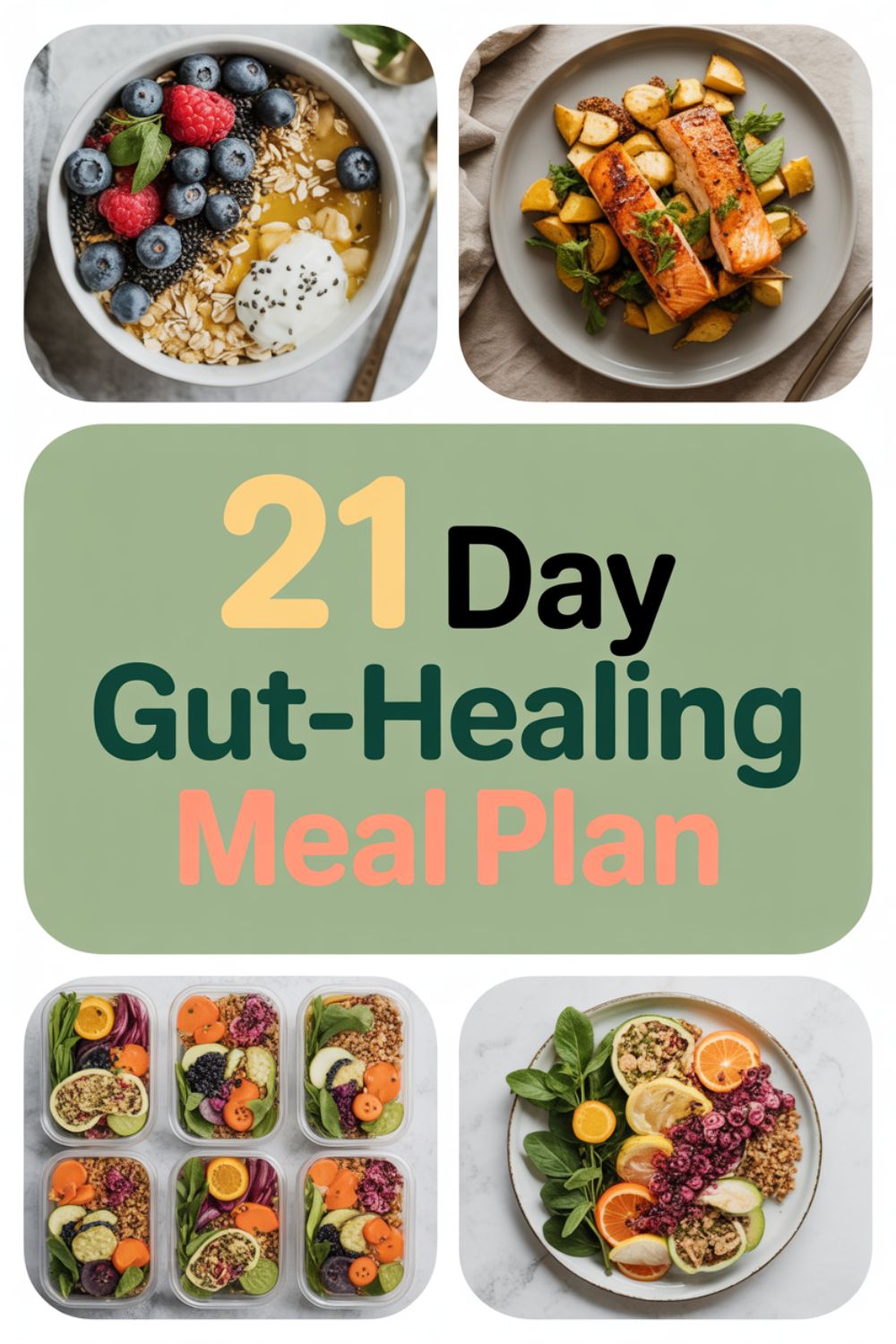
Start your mornings with something gentle on your system. Overnight oats are your friend here—they’re loaded with prebiotic fiber that feeds your good gut bacteria. Get Full Recipe for my favorite version with chia seeds and blueberries.
For lunch, think simple proteins with loads of vegetables. Grilled chicken over mixed greens with a variety of colorful veggies isn’t boring when you season it right. I use this herb grinder to quickly add fresh flavor without reaching for inflammatory sauces.
Dinner should be your biggest meal but not your heaviest. A piece of wild-caught salmon with roasted sweet potato and steamed broccoli hits all the right notes. The omega-3s in salmon are particularly powerful for reducing gut inflammation.
The Adjustment Period
Let’s be real: the first few days might suck. You might get headaches, feel tired, or experience what’s charmingly called a “healing crisis.” This is normal. Your body is detoxing from all the processed garbage it’s been dealing with.
Keep a good quality water bottle with you at all times. Hydration is crucial during this phase. I’m talking about at least half your body weight in ounces daily.
Week 2: Building Momentum
By week two, your taste buds are recalibrating. Foods that seemed bland before suddenly have flavor. That’s because you’re no longer drowning everything in salt and sugar.
This is when you start introducing more fermented foods. Sauerkraut, kimchi, kefir, and yogurt with live cultures become regular players in your meal rotation. These foods deliver beneficial probiotics directly to your gut.
One thing I’ve learned: don’t go crazy with fermented foods right away. Start with a tablespoon of sauerkraut at lunch and gradually increase. Too much too fast can cause gas and bloating—the opposite of what we’re going for.
Meal Prep Strategy
Here’s where meal prep becomes your best friend. I’m not talking about cooking 21 identical meals. That’s depressing. I’m talking about smart prep that gives you options.
Cook a big batch of quinoa, grill several chicken breasts, roast a few sheet pans of vegetables. Now you can mix and match throughout the week. I keep everything in these glass meal prep containers—they’re leak-proof and you can see what’s inside without opening every single one.
For more morning inspiration, try these high-protein breakfast ideas or this Mediterranean-style egg scramble that takes literally 10 minutes.
Snack Smart
Snacking doesn’t have to derail your progress. Keep it simple: apple slices with almond butter, carrots with hummus, or a handful of raw nuts. I keep a small container of mixed nuts and seeds in my bag at all times, stored in this portable snack container.
Meal Prep Essentials Used in This Plan
Look, you don’t need fancy equipment, but these tools genuinely make the difference between sticking with it and giving up on day four:
- Physical Products:
- Glass Meal Prep Containers Set – Seriously, ditch the plastic. These won’t stain, they’re microwave-safe, and you can actually see your food
- High-Speed Blender – For smoothies, soups, and making your own nut butters. Mine has paid for itself ten times over
- Instant Pot or Pressure Cooker – Bone broth in 2 hours instead of 24? Yes please
- Digital Resources:
- Complete Gut-Healing Recipe eBook – 100+ recipes organized by week with shopping lists
- Meal Planning Template Bundle – Printable planners and grocery lists that actually work
- Gut Health Tracking Journal (Digital) – Track symptoms, energy levels, and progress
Week 3: The Transformation Phase
This is where things get interesting. By week three, your gut bacteria have shifted significantly. The beneficial bacteria are thriving, the inflammatory ones are starving, and your gut lining is starting to repair itself.
You’ll probably notice that you’re sleeping better, your skin looks clearer, and your energy is more consistent throughout the day. These aren’t coincidences—they’re all connected to gut health.
Expanding Your Food Variety
Diversity is key for a healthy microbiome. Try to eat at least 30 different plant foods per week. This sounds harder than it is. Herbs count. Spices count. That mixed green salad? That’s already five different plants.
Rotate your proteins too. If you’ve been eating chicken every day, switch to turkey, fish, or plant-based proteins a few times this week. Speaking of which, check out this lentil and quinoa power bowl—it’s become a weekly staple in my house.
One tool that’s made variety easier for me is this spice rack organizer. When you can actually see what spices you have, you’re more likely to use them.
Fine-Tuning Your Approach
By now, you’ve figured out which foods make you feel amazing and which ones still don’t sit quite right. Maybe you’ve discovered that raw cruciferous vegetables cause bloating, but cooked ones are fine. That’s valuable information.
Keep a simple food journal. Nothing fancy—just note what you eat and how you feel two hours later. I use this minimalist journal that has prompts for tracking energy, digestion, and mood without being overwhelming.
Key Foods That Do the Heavy Lifting
Let’s talk specifics. These are the MVPs of gut healing, backed by actual science, not Instagram wellness influencers:
Fermented Foods
Sauerkraut, kimchi, kefir, and yogurt deliver live beneficial bacteria directly to your gut. Start with small amounts and work your way up. I make my own sauerkraut using this fermentation kit—it’s stupidly easy and saves a fortune.
Bone Broth
Rich in collagen, glutamine, and glycine—all crucial for repairing your gut lining. Drink it straight, use it as a cooking base, or turn it into soup. No time to make it? This organic bone broth is the closest thing to homemade I’ve found.
Prebiotic-Rich Foods
These feed your good bacteria. We’re talking about garlic, onions, asparagus, bananas (slightly green ones), and oats. Your gut bacteria ferment these fibers and produce short-chain fatty acids that are incredibly anti-inflammatory.
Omega-3 Fatty Acids
Found in fatty fish, walnuts, chia seeds, and flaxseeds. These are powerful anti-inflammatory agents. I supplement with a high-quality fish oil on days I don’t eat fish, but whole food sources are always better.
Polyphenol-Rich Foods
Berries, dark chocolate (yes, really), green tea, and olive oil. These plant compounds have been shown to promote the growth of beneficial gut bacteria while inhibiting harmful ones. Harvard research confirms that berries in particular are potent in their anti-inflammatory activity.
Tools & Resources That Make Cooking Easier
These aren’t just “nice to have”—they actually remove friction from the process:
- Physical Products:
- Food Processor – Chopping vegetables becomes a 30-second job instead of a 10-minute chore
- Quality Chef’s Knife – A sharp knife is safer and makes cooking actually enjoyable
- Cast Iron Skillet – Indestructible, naturally non-stick when seasoned, and adds iron to your food
- Digital Resources:
- 21-Day Gut Reset Video Course – Step-by-step cooking demos for every recipe
- Gut Health Supplements Guide (PDF) – What to take, when, and why (or why not)
- Grocery Shopping Made Simple App – Organized lists by store section
Join Our Community: Connect with others on the same journey in our WhatsApp group. Share wins, swap recipes, and get support when you need it.
What to Avoid (And Why It Matters)
I’m not big on restriction for restriction’s sake, but some foods genuinely interfere with gut healing. For these 21 days, you’re avoiding:
- Refined Sugar: Feeds bad bacteria and promotes inflammation. Yes, even the “natural” stuff needs to be limited
- Processed Foods: Loaded with additives that damage your gut lining and disrupt your microbiome
- Alcohol: It’s inflammatory and damages your gut barrier. Three weeks without it won’t kill you
- Gluten (for now): Many people have undiagnosed sensitivity. You can reintroduce it after and see how you feel
- Dairy (except fermented): Causes inflammation for many people. Yogurt and kefir are okay because the fermentation process breaks down the problematic proteins
This isn’t forever. This is a reset. After 21 days, you can start reintroducing foods one at a time and see how your body responds.
Sample Day-by-Day Breakdown
You want specifics? Here’s what a typical day looks like during each week:
Week 1 Sample Day
Breakfast: Overnight oats with chia seeds, blueberries, and a drizzle of raw honey. Get Full Recipe
Snack: Green apple with almond butter
Lunch: Mixed greens salad with grilled chicken, avocado, cucumber, cherry tomatoes, and olive oil-lemon dressing
Snack: Carrots and celery with hummus
Dinner: Baked salmon with roasted sweet potato and steamed broccoli. Pro tip: I season the salmon with this herb blend that takes it from boring to restaurant-quality
Week 2 Sample Day
Breakfast: Scrambled eggs with spinach and a side of sauerkraut. Get Full Recipe
Snack: Berries with a handful of walnuts
Lunch: Turkey and vegetable soup made with bone broth base
Snack: Kefir smoothie with frozen berries
Dinner: Grilled chicken thighs with roasted Brussels sprouts and quinoa. For more complete dinner ideas, check out this anti-inflammatory dinner collection
Week 3 Sample Day
Breakfast: Green smoothie with spinach, banana, chia seeds, almond butter, and kefir. I blend mine in this personal blender that’s way easier to clean than full-size blenders
Snack: Rice cakes with avocado and everything bagel seasoning
Lunch: Lentil and vegetable stew with a side of mixed greens
Snack: Kombucha with raw almonds
Dinner: Grass-fed beef with roasted root vegetables and a side of kimchi
Dealing with Social Situations
Here’s the awkward truth: eating this way for 21 days means you’ll have to navigate social situations differently. Birthday parties, work lunches, family dinners—they all become potential minefields.
My advice? Don’t be a martyr about it, but don’t be a pushover either. Explain briefly that you’re doing a health reset, eat what you can from what’s available, and don’t make it a big dramatic thing. People respect commitment when you’re not preachy about it.
If you’re going to someone’s house for dinner, offer to bring a dish. Make something that fits your plan and is so good that everyone else will want it too. This roasted vegetable medley has never failed to impress.
The Mental Game
FYI, the hardest part of this plan isn’t the food—it’s your brain fighting against change. Your habits are deeply ingrained, and breaking them requires conscious effort.
When you get a craving, wait 20 minutes. Drink water. Go for a walk. Most cravings pass if you don’t immediately give in to them. I keep herbal tea bags everywhere—my desk, my car, my bag. Having a warm cup of peppermint or ginger tea often satisfies the need for “something” without derailing progress.
Beyond the 21 Days
So what happens after three weeks? Do you go back to eating whatever you want? IMO, that would be a waste of all your effort.
The 21-day plan is a reset, not a finish line. Use it as a launching pad to develop a sustainable, gut-friendly eating pattern for life. Maybe you reintroduce some foods and find you feel fine with them. Great. Maybe you discover that gluten really does make you feel terrible. Now you know.
The key is maintaining the core principles: lots of vegetables, quality proteins, healthy fats, and fermented foods. Keep processed stuff to a minimum. Listen to your body. It’s pretty simple when you think about it.
Related Recipes You’ll Love
Frequently Asked Questions
Can I drink coffee during the 21-day plan?
Yes, black coffee is fine and actually beneficial—it’s rich in polyphenols. Just skip the sugar and artificial creamers. If you need something in it, try unsweetened almond milk or a splash of full-fat coconut milk. The gut-disrupting culprits are the additives, not the coffee itself.
What if I mess up and eat something I shouldn’t?
Don’t spiral. One meal doesn’t undo all your progress. Just get back on track with your next meal. The all-or-nothing mentality is what actually derails people, not the occasional slip-up. Be kind to yourself and keep moving forward.
Will I lose weight on this plan?
Probably, yeah. But that’s not the primary goal. Weight loss is a side effect of reducing inflammation and eating whole foods. Most people drop 5-10 pounds during the 21 days, but the real wins are better digestion, clearer skin, improved energy, and reduced bloating.
Do I need to take probiotics during this plan?
You’re getting probiotics from fermented foods, which is ideal. If you want to add a supplement, choose one with multiple strains and at least 10 billion CFUs. But honestly, focus on eating the fermented foods consistently—they’re more effective than most supplements and cost way less.
Can I do this plan if I’m vegetarian or vegan?
Absolutely. Just swap animal proteins for plant-based ones: lentils, beans, tempeh, and tofu. Make sure you’re getting enough variety to hit all your nutritional needs. The principles of gut healing—fermented foods, prebiotics, anti-inflammatory foods—work just as well on a plant-based diet.
Your Gut Deserves This
Look, I get it. Three weeks of intentional eating sounds like a lot. But compare that to months or years of feeling bloated, tired, and generally crappy. Your gut is the foundation of your health. Everything connects back to it.
This isn’t about perfection. It’s about consistency. It’s about giving your body the resources it needs to heal itself, because trust me, it wants to heal. You’ve just been getting in the way with processed food, stress, and inconsistent habits.
Start tomorrow. Prep some overnight oats tonight. Clear the junk food out of your pantry. Download a meal planning template. Take your “before” measurements and photos. Then just take it one meal, one day at a time.
Your gut—and your future self—will thank you.
Remember: This plan is meant to educate and inspire, but it’s not a substitute for professional medical advice. If you have serious digestive issues or any medical conditions, talk to your doctor before making significant dietary changes.