30 Low-Sugar Meals for Blood Sugar Control
Look, I get it. You’ve been told to “watch your blood sugar,” and now you’re staring at your pantry like it’s a minefield. Bread? Suspect. Pasta? Traitor. That innocent-looking banana? Apparently, it’s plotting against you.
Here’s the thing though—eating for stable blood sugar doesn’t mean living on sad salads and plain chicken breast for eternity. I’ve spent the better part of a year figuring out how to eat meals that actually taste good while keeping my energy steady and my glucose meter happy. And honestly? Some of these meals have become my absolute favorites, blood sugar goals aside.
This isn’t about restriction or deprivation. It’s about being smart with your choices and understanding how food actually works in your body. Think of it as learning a new language—once you get the basics down, everything else clicks into place.
Why Low-Sugar Eating Actually Matters (Without the Lecture)
Before we dive into the meals, let’s talk about why this matters—and I promise to keep it brief. When you eat high-sugar foods, your blood glucose spikes, your pancreas freaks out and dumps insulin into your system, and then you crash harder than my motivation on a Monday morning. This roller coaster doesn’t just make you feel terrible; over time, it can lead to insulin resistance, type 2 diabetes, and a whole host of other issues nobody wants to deal with.
According to research from the CDC, maintaining blood sugar levels between 80-130 mg/dL before meals and less than 180 mg/dL two hours after eating is the sweet spot for most people. The goal isn’t perfection—it’s consistency.
What I’ve learned is that food order actually matters. A fascinating study published in Frontiers in Nutrition found that eating vegetables and protein before carbohydrates can reduce post-meal glucose spikes by up to 73%. Yeah, you read that right—just changing the order you eat things can make a massive difference.
The Foundation: Understanding What Makes a Meal “Low-Sugar”
Here’s where people get confused. A low-sugar meal isn’t just about avoiding candy and soda. It’s about managing your total carbohydrate load and pairing carbs with protein, fat, and fiber to slow down digestion.
The DASH diet (Dietary Approaches to Stop Hypertension) has been getting a lot of attention lately, and for good reason. Recent NIH research showed that a modified version called DASH4D can increase time spent in the optimal blood glucose range by an extra 75 minutes per day. That’s over an hour of stable energy just from eating differently.
When I’m planning meals, I think about three things: protein to stabilize, fiber to slow things down, and healthy fats to keep me satisfied. Get those three right, and you can still enjoy carbs without the glucose spike from hell.
Speaking of protein and fiber, if you’re looking for a structured approach, check out this 14-day low-sugar meal plan that takes all the guesswork out of planning.
30 Low-Sugar Meals That Don’t Suck
Breakfast Winners (Because Morning Sets the Tone)
1. Greek Yogurt Power Bowl
Plain Greek yogurt (not the flavored sugar bombs), topped with a handful of berries, crushed walnuts, and a tiny drizzle of honey. The protein-to-carb ratio here is chef’s kiss, and it keeps you full until lunch. I use this insulated bowl to keep everything cold while I’m getting ready in the morning.
2. Veggie-Loaded Egg Scramble
Three eggs, bell peppers, spinach, mushrooms, and a sprinkle of cheese. Sometimes I’ll throw in leftover chicken if I’m feeling fancy. The key is to load up on the veggies—they add volume without spiking your sugar.
3. Overnight Oats (The Smart Way)
Half a cup of oats (not the instant kind), chia seeds, unsweetened almond milk, and cinnamon. Let it sit overnight, and top with berries in the morning. The chia seeds add extra fiber and omega-3s, which help with inflammation. Get Full Recipe
4. Avocado Toast on Whole Grain
One slice of proper whole grain bread (check the label—aim for at least 3g of fiber per slice), mashed avocado, everything bagel seasoning, and a fried egg on top. The fat from the avocado slows down the carb absorption from the bread.
5. Protein Smoothie That Actually Works
Spinach, half a banana (yes, really), protein powder, almond butter, and unsweetened almond milk. Blend it with ice. I can’t believe I’m recommending a green smoothie, but this one genuinely tastes good and keeps your blood sugar stable. My high-powered blender makes quick work of this every morning.
For more breakfast inspiration that won’t spike your glucose, you might also want to try these blood sugar-friendly morning meals or this high-protein breakfast collection if you’re looking to keep things interesting.
Lunch Ideas That Keep You Going
6. Mason Jar Salad (Done Right)
Layer it properly: dressing at the bottom, sturdy veggies (cucumbers, tomatoes), protein (grilled chicken or chickpeas), softer veggies, and greens on top. Shake it up when you’re ready to eat. I’ve been using these wide-mouth mason jars for two years now, and they’re still going strong.
7. Turkey and Cheese Roll-Ups
Ditch the bread. Take sliced turkey, spread with mustard or hummus, add cheese and veggies, and roll it up. Eat it with baby carrots or bell pepper strips. It sounds boring until you realize it’s basically a sandwich without the post-lunch carb coma.
8. Zucchini Noodle Bowl
Spiralized zucchini (or buy the pre-made kind because who has time), marinara sauce (check the sugar content), ground turkey, and parmesan. It’s basically spaghetti that won’t make you want to nap under your desk. Get Full Recipe
9. Cauliflower Fried Rice
Riced cauliflower, scrambled egg, soy sauce, frozen mixed veggies, and whatever protein you have hanging around. Tastes shockingly close to the real thing, and you can make a huge batch for the week.
10. Chicken and Veggie Soup
Homemade is best because you control the ingredients. Chicken, celery, carrots, green beans, chicken broth, and seasonings. Skip the noodles or use a small amount of whole grain pasta. This is comfort food that actually loves you back.
If you’re looking for complete meal planning that takes the guesswork out of lunch, this 30-day blood sugar balance plan has been a game-changer for a lot of people in our community.
Dinner Options That Actually Satisfy
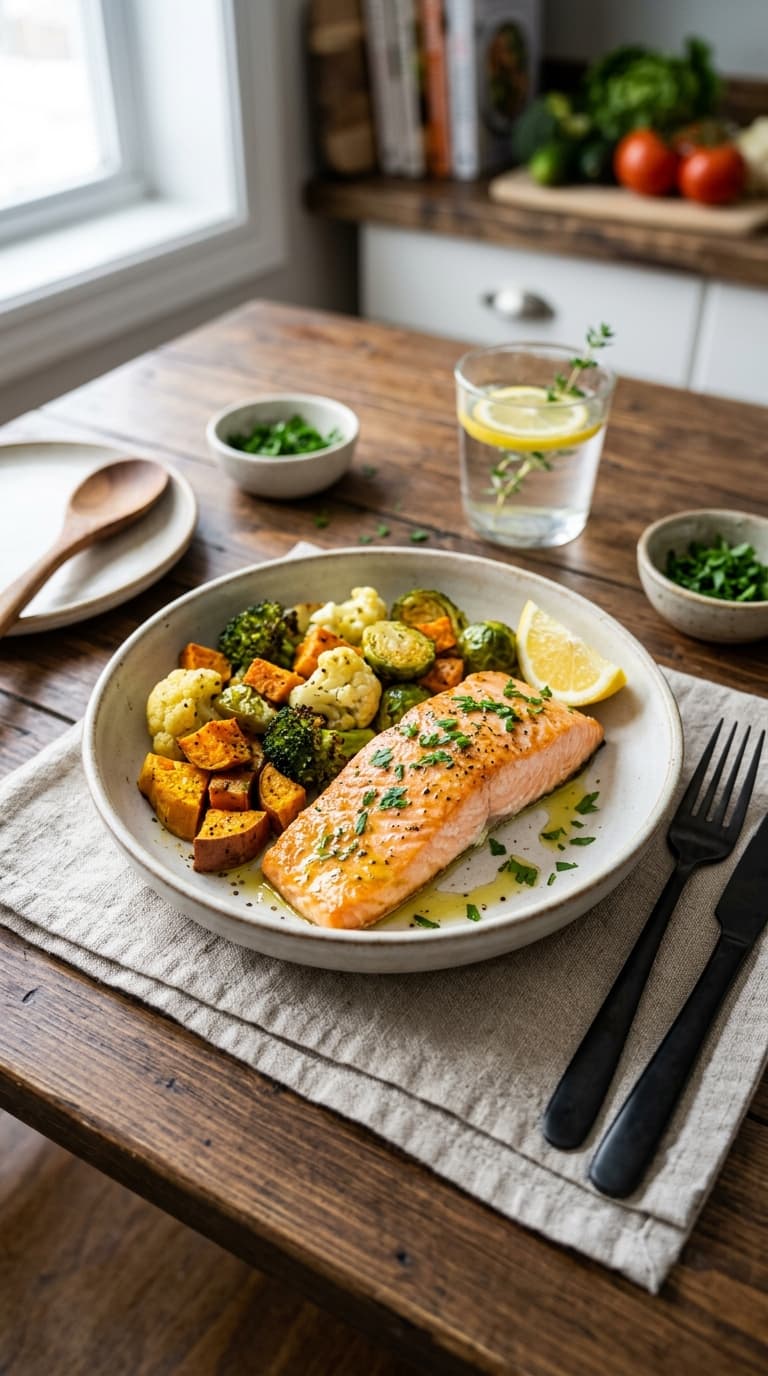
11. Sheet Pan Salmon and Veggies
Salmon fillet, broccoli, Brussels sprouts, olive oil, lemon, and whatever seasonings make you happy. Everything on one pan, 20 minutes at 400°F. According to Medical News Today, oily fish like salmon can actually improve blood sugar regulation after meals.
12. Turkey Chili
Ground turkey, black beans, tomatoes, peppers, onions, and spices. The beans add fiber, the turkey adds protein, and the whole thing is basically a hug in a bowl. Make a big batch and freeze portions. My programmable slow cooker does all the heavy lifting for this one.
13. Grilled Chicken with Cauliflower Mash
Marinated chicken breast, cauliflower mashed with garlic and a bit of butter. Add a side salad. It’s the low-carb version of chicken and mashed potatoes, and honestly, the cauliflower version might be better. Don’t at me.
14. Baked Cod with Green Beans
Cod seasoned with lemon and herbs, green beans roasted with garlic. Simple, clean, and your blood sugar will be steady as a rock. Takes 15 minutes start to finish if you’re using frozen cod.
15. Beef and Broccoli Stir-Fry
Lean beef strips, broccoli, soy sauce, ginger, garlic, and sesame oil. Serve over a small portion of brown rice or skip the rice entirely and add more veggies. The key is the sauce-to-meat ratio—go heavy on the veggies, light on the sugar in your sauce. Get Full Recipe
Looking for even more dinner variety? These anti-inflammatory dinners are all low-sugar friendly and absolutely delicious.
Snacks That Won’t Sabotage You
16. Hard-Boiled Eggs with Everything Seasoning
Boil a dozen eggs on Sunday. Eat them with a sprinkle of everything bagel seasoning. Protein, fat, and basically zero carbs. They travel well too.
17. Almonds and String Cheese
A small handful of almonds (about 20) and a stick of string cheese. This combo keeps me satisfied for hours. Just don’t eat the whole container of almonds—I learned that lesson the hard way.
18. Veggie Sticks with Guacamole
Cucumbers, bell peppers, and celery with homemade or store-bought guacamole. The healthy fats from the avocado are incredibly satiating.
19. Greek Yogurt with Nuts
Plain Greek yogurt, a handful of pecans or walnuts, and a tiny drizzle of sugar-free maple syrup if you’re feeling wild. High protein, healthy fats, minimal sugar.
20. Turkey Jerky
Look for brands with minimal added sugar. It’s portable, shelf-stable, and packed with protein. I keep a bag in my car for emergencies. My go-to brand is this low-sugar turkey jerky that actually tastes like food and not cardboard.
Meal Prep Favorites
21. Egg Muffins (Six Different Ways)
Basic recipe: eggs, your choice of veggies and protein, cheese optional. I make batches with different combos—bacon and cheddar, spinach and feta, bell pepper and turkey sausage. Freeze half, keep half in the fridge.
22. Mason Jar Overnight Oats Variety Pack
Make five jars on Sunday with different toppings—one with blueberries and walnuts, one with apple and cinnamon, one with strawberries and almonds. Grab and go.
23. Chicken Burrito Bowls
Seasoned chicken, cauliflower rice, black beans, salsa, cheese, and avocado. Prep all the components separately and assemble throughout the week. Way better than anything you’d get in a drive-through. Get Full Recipe
24. Turkey Meatballs with Marinara
Make a huge batch of turkey meatballs, portion them out, freeze some. Pull them out as needed and serve with zucchini noodles or a big salad. I use this portion control container set to keep everything organized in the freezer.
25. Tuna Salad Lettuce Wraps
Mix tuna with Greek yogurt instead of mayo (trust me), add celery, onion, and seasonings. Wrap in butter lettuce leaves. High protein, low carb, and actually filling.
For those who want a complete meal prep system that’s already figured out for you, the 14-day flat belly meal prep plan is basically meal prep on easy mode.
Comfort Food Makeovers
26. Cauliflower Pizza Crust Personal Pizza
Yes, I know. But hear me out—when you’re craving pizza at 9 PM, this scratches the itch without the blood sugar disaster. Load it with veggies and protein, go light on the cheese.
27. Spaghetti Squash Carbonara
Roasted spaghetti squash, bacon, egg, parmesan, and black pepper. It’s basically carbonara but vegetable-forward. The egg creates this creamy sauce that’s ridiculously good.
28. Lettuce Wrap Tacos
Seasoned ground beef or turkey, all your favorite taco toppings, wrapped in crunchy lettuce instead of tortillas. I won’t lie—it’s messier. But it works, and your blood sugar stays happy.
29. Keto-ish Shepherd’s Pie
Ground beef or lamb, veggies, topped with cauliflower mash instead of potatoes. Bake until golden. It’s every bit as comforting as the original without the carb overload.
30. Chicken Crust Pizza (Yes, Really)
Ground chicken mixed with egg and cheese, pressed into a crust shape, baked, then topped like pizza. It sounds weird. It tastes amazing. Don’t knock it till you try it. Get Full Recipe
Meal Prep Essentials Used in This Plan
After making these meals week after week, I’ve figured out which tools actually matter and which ones just take up space in your kitchen. Here’s what I actually use:
Physical Tools:
- Glass meal prep containers with locking lids — Microwave safe, dishwasher safe, and they don’t stain. I have 12 and use every single one.
- Digital kitchen scale — Game changer for portion control. Also helps when you’re trying to figure out carb counts.
- Spiralizer for veggie noodles — Makes zucchini noodles, cucumber ribbons, all that good stuff. Hand-crank version is fine; you don’t need the fancy electric one.
Digital Resources:
- 30-Day High Protein Meal Plan — If you want variety without thinking, this has 90 different meals already planned out
- 21-Day Flat Belly Reset — Great for getting back on track after a vacation or holiday where everything went sideways
- 7-Day Gut Healing Plan — Because blood sugar and gut health are more connected than most people realize
If you want accountability and a community of people doing the same thing, our WhatsApp group has been incredibly helpful. Real people sharing what’s working, what’s not, and recipe swaps that actually make sense. Nobody’s trying to sell you anything—just people helping people.
Tools and Resources That Make Cooking Easier
Look, I’m not trying to turn you into a professional chef here. These are just the things that make weeknight cooking less of a disaster:
Kitchen Gear That Actually Helps:
- Instant-read meat thermometer — No more guessing if your chicken is done. Stick it in, get a number, move on with your life.
- Silicone baking mats — I haven’t bought parchment paper in two years. These things are indestructible and make cleanup stupid easy.
- Good quality chef’s knife — You don’t need a whole set. One good knife that you keep sharp will do 90% of what you need.
Planning Resources:
- 21-Day High Protein Plan for Lean Muscle — Perfect if you’re trying to build muscle while managing blood sugar
- 7-Day Hormone Balancing Plan — Hormones and blood sugar are besties—when one’s off, the other usually follows
- 30-Day Gut Reset with Quick Recipes — All recipes under 30 minutes because some of us have lives
The planning stuff might seem like overkill, but having a system in place means you’re way less likely to order pizza at 8 PM when you can’t figure out what to eat.
What Actually Works in Real Life
Here’s what I’ve learned after a year of this: perfection is the enemy of progress. You’re not going to nail it every single day, and that’s fine. The goal is to make better choices most of the time, not to live in a state of constant food anxiety.
Some practical tips that have actually helped me stick with this:
Plan for the chaos. Keep emergency food on hand—canned tuna, hard-boiled eggs, pre-washed salad, rotisserie chicken. When life gets nuts (and it will), you have options that aren’t terrible.
Don’t let perfect be the enemy of good. Had a regular potato instead of a sweet potato? You’re fine. Ate white rice instead of cauliflower rice? The world didn’t end. Just get back on track with the next meal.
Track how you feel, not just the numbers. Yeah, blood sugar readings are important, but also pay attention to your energy levels, mood, and hunger signals. Those tell you just as much about whether something’s working.
Prep the stuff you hate making. For me, it’s chopping vegetables. So I spend 20 minutes on Sunday chopping everything I’ll need for the week. Game changer. My food processor handles the bulk of this work, and I’m not standing there with a knife for an hour.
Build in treats that won’t wreck you. Greek yogurt with a tiny bit of honey, a square of dark chocolate, berries with whipped cream. You can have sweet things without sending your glucose into orbit.
Sarah from our community lost 15 pounds in three months just by swapping out her breakfast and being more intentional about lunch. She didn’t go extreme, didn’t cut out entire food groups, just made smarter swaps and stuck with them. That’s the kind of sustainable change that actually works.
Frequently Asked Questions
Can I still eat fruit on a low-sugar diet for blood sugar control?
Absolutely, but pair it smart. Berries are your best bet—they’re lower in sugar and high in fiber. When you do eat fruit, pair it with protein or fat to slow down the sugar absorption. An apple with almond butter? Great. An apple by itself on an empty stomach? Your blood sugar might complain.
How long does it take to see improvements in blood sugar levels?
Most people notice changes within a week or two of consistent eating. Your energy will stabilize first, then you’ll see the numbers improve on your glucose monitor. But here’s the thing—consistency matters more than perfection. Three weeks of good-enough eating beats three days of perfect eating followed by giving up.
Do I need to cut out all carbs to control blood sugar?
Nope. Carbs aren’t the enemy—it’s the type and amount that matter. Whole grains, legumes, and vegetables all have carbs, and they’re fine in reasonable portions. The key is balancing them with protein and fat, and watching your portion sizes. A cup of quinoa with grilled chicken and vegetables? Perfectly fine. Three cups of pasta with tomato sauce? That’s gonna be a problem.
What’s the best time to eat for blood sugar control?
According to UCLA Health research, timing your meals consistently helps, and taking even a five-minute walk after eating can significantly improve blood sugar response. I try to eat at roughly the same times each day, and I make sure to move a bit after lunch—even if it’s just walking to get coffee.
Can I eat out at restaurants while managing blood sugar?
Of course. Just make smart swaps—ask for veggies instead of fries, get dressing on the side, choose grilled over fried. Most restaurants are pretty accommodating if you ask. IMO, the social aspect of eating out is important too, so don’t become a hermit just because you’re watching your blood sugar.
The Bottom Line
Managing blood sugar doesn’t mean you’re sentenced to a life of boring, tasteless food. It means getting smarter about how you eat, understanding which foods work with your body instead of against it, and building habits that actually stick.
These 30 meals are just a starting point. You’ll find your favorites, develop your own variations, and figure out what works for your schedule and taste preferences. The goal isn’t to follow every recipe exactly—it’s to give you a framework for making better choices without feeling deprived.
Start with one or two meals that sound good to you. Make them a few times until they become second nature. Then add another one. Before you know it, you’ll have a whole rotation of go-to meals that keep your blood sugar stable and actually taste good. And honestly? That’s when this whole thing stops feeling like a diet and starts feeling like just… how you eat.
Your blood sugar (and your energy levels, and your mood, and probably your waistline) will thank you. Now go make something delicious.