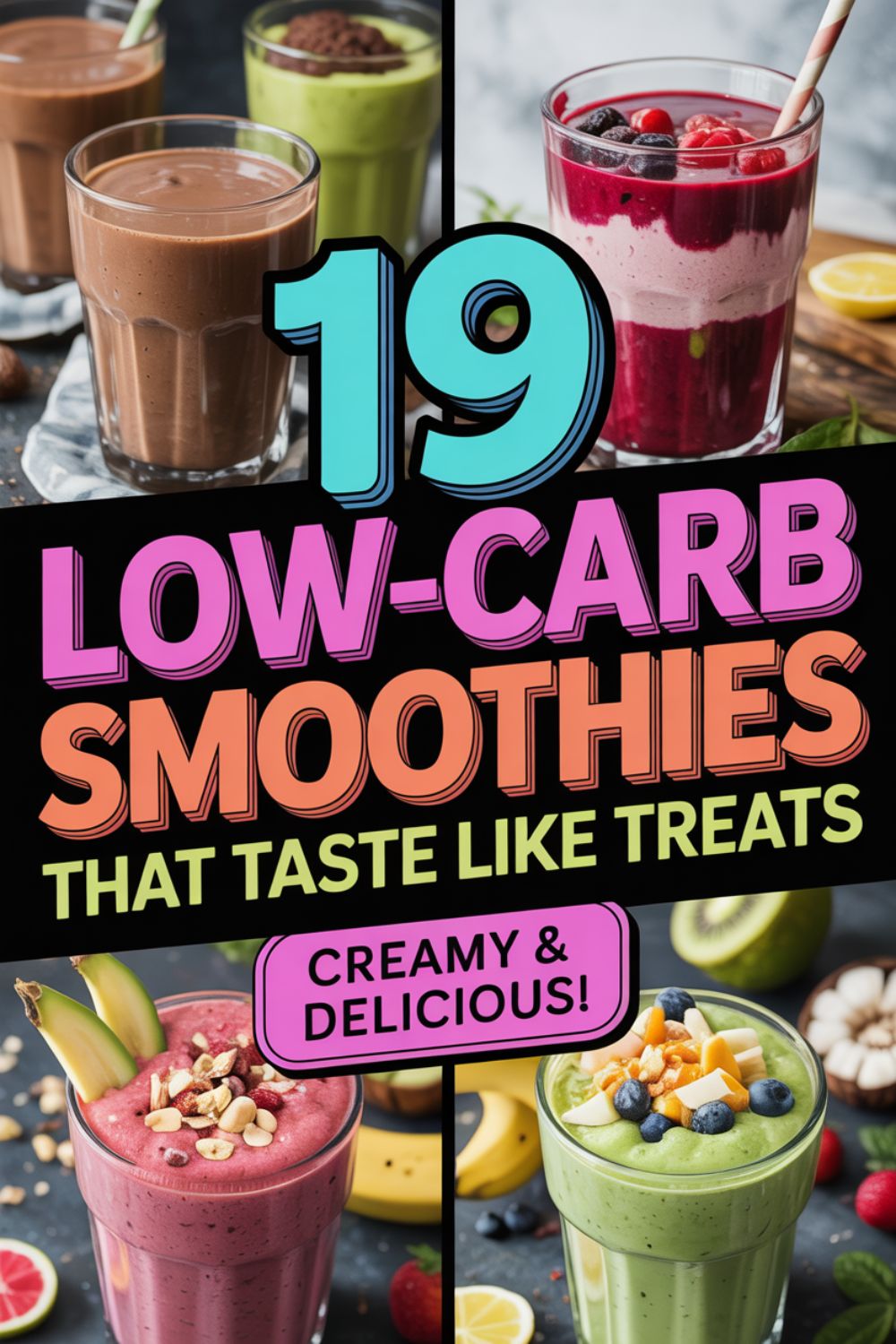
19 Low-Carb Smoothies That Taste Like Treats
Look, I get it. You’re trying to cut carbs, but your taste buds are staging a full-on rebellion. They want milkshakes. They want frappuccinos. They want anything that doesn’t taste like kale had a bad day.
Here’s the thing about low-carb smoothies that nobody tells you—they can actually taste incredible. Not “well, it’s healthy so I guess it’s okay” incredible. I’m talking legitimate dessert-level satisfaction that won’t send your blood sugar on a rollercoaster ride.
I’ve spent way too many mornings experimenting with my high-speed blender, trying to crack the code on smoothies that keep carbs low but flavor ridiculously high. Some attempts were… let’s just say my compost bin got really well-fed. But the ones that worked? Total game-changers.
Whether you’re managing your blood sugar, following a keto plan, or just tired of feeling like you need a nap after breakfast, these 19 smoothies are about to become your new morning obsession. Research shows that low-carb diets can help with blood sugar control and weight management, which is exactly what we’re going for here.
Why Low-Carb Smoothies Actually Work
Before we dive into the recipes, let’s talk about why cutting carbs in your smoothies makes such a difference. Most commercial smoothies are basically sugar bombs disguised as health food. A medium-sized fruit smoothie from a popular chain can pack 50-80 grams of carbs—that’s more than a can of soda.
The secret to low-carb smoothies is replacing high-sugar fruits with berries, using healthy fats to keep you satisfied, and adding protein to stabilize your energy. According to nutritional experts, keeping your smoothies between 10-20 net carbs while boosting protein and healthy fats creates the perfect balance for sustained energy without the crash.
Think about it this way: when you blend up a banana, mango, and orange juice, you’re basically drinking liquid sugar. Your body processes it fast, your insulin spikes, and an hour later you’re face-down in a bag of chips. Not exactly the energy boost you were hoping for, right?
The Foundation: Essential Low-Carb Smoothie Ingredients
Let me save you from making the same mistakes I did. You need the right ingredients in your kitchen, or you’ll end up with something that tastes like grass clippings mixed with regret.
Liquid Bases That Don’t Sabotage Your Carb Count
Water is fine if you’re trying to win an award for Most Boring Smoothie Ever. For the rest of us, unsweetened almond milk is your best friend—only 1-2 grams of carbs per cup. Coconut milk from a carton (not the canned stuff) works too, though it’s slightly higher in carbs. I use unsweetened vanilla almond milk in probably 90% of my smoothies because it adds just enough flavor without any sugar.
Some people swear by coconut water, but here’s the deal: it’s got about 9 grams of carbs per cup. Not terrible, but not great if you’re trying to keep things super low-carb.
Fruits That Won’t Wreck Your Blood Sugar
Berries are your heroes here. Strawberries, raspberries, blackberries, and blueberries all have relatively low sugar content and tons of fiber. A half-cup of strawberries? Only about 6 grams of net carbs. Compare that to a banana’s 27 grams and you’ll see why I haven’t bought a banana in months.
Avocado is technically a fruit, and it’s phenomenal in smoothies. Sounds weird until you try it. The creaminess it adds is unreal, and we’re talking maybe 2-3 grams of net carbs for a quarter of an avocado.
For a wider range of blood sugar-friendly options, check out these low-sugar meals for balanced energy that follow the same principles.
Protein Powder: The Non-Negotiable
If your smoothie doesn’t have protein, it’s just a snack pretending to be a meal. I use unflavored whey protein isolate most days—about 25 grams of protein with zero carbs. If you’re plant-based, pea protein powder or hemp protein work great, though they have a slightly earthier taste.
Greek yogurt is another solid protein source if dairy doesn’t bother you. Go for the full-fat, plain variety—about 10 grams of protein per half-cup and only 5 grams of carbs. The low-fat stuff is basically sugar with a yogurt label.
Healthy Fats for Staying Power
This is where smoothies go from “I’m hungry again in an hour” to “I’m good until lunch.” Healthy fats slow down digestion and keep your blood sugar stable. Plus they make everything taste richer.
My go-to fats: MCT oil (flavorless and gives you steady energy), almond butter, coconut cream, chia seeds, or flax seeds. Even just a tablespoon makes a huge difference in how satisfying your smoothie feels.
Speaking of protein and fat, these high-protein anti-inflammatory breakfasts use the same formula to keep you energized all morning.
19 Low-Carb Smoothie Recipes That Actually Deliver
Alright, let’s get to the good stuff. I’m breaking these down by flavor profile so you can find exactly what you’re craving.
The Green Goddess Collection
1. Classic Spinach Avocado Smoothie – This is the gateway drug to green smoothies. Spinach, half an avocado, unsweetened almond milk, vanilla protein powder, and a handful of ice. The avocado makes it so creamy you’d swear there’s ice cream in there. About 8 grams of net carbs.
2. Cucumber Mint Refresher – Half a cucumber, fresh mint leaves, lime juice, coconut milk, and a scoop of vanilla protein. Tastes like summer in a glass. Ridiculously hydrating. Around 6 grams of net carbs.
3. Kale Pineapple Paradise – Okay, hear me out on the pineapple. Just a quarter-cup gives you that tropical vibe without going overboard on sugar. Kale, a tiny bit of pineapple, coconut cream, protein powder, and ice. About 10 grams of net carbs.
4. Green Tea Matcha Boost – Matcha powder, spinach, unsweetened almond milk, MCT oil, and vanilla protein. This one’s for when you need caffeine but also nutrients. I blend this with ceremonial grade matcha powder for the best flavor. Roughly 5 grams of net carbs.
If you’re enjoying these green options, you’ll love the variety in this 7-day gut-healing plan that focuses on fiber-rich, nutrient-dense meals.
Berry Bliss Smoothies
5. Triple Berry Protein Punch – Mixed berries (strawberries, blueberries, raspberries), Greek yogurt, almond milk, and protein powder. The holy grail of berry smoothies. About 12 grams of net carbs if you keep the berries to half a cup total.
6. Strawberry Cheesecake Dream – This one’s dangerous because it tastes exactly like dessert. Strawberries, cream cheese (yes, really), vanilla protein, almond milk, and a tiny bit of stevia. Around 9 grams of net carbs. Get Full Recipe.
7. Blackberry Coconut Cream – Blackberries, coconut cream, vanilla extract, protein powder, and ice. Rich, decadent, and only about 8 grams of net carbs. The coconut cream makes this taste like a piña colada had a baby with a berry smoothie.
8. Raspberry Almond Joy – Raspberries, almond butter, cocoa powder, unsweetened almond milk, and chocolate protein powder. Tastes like candy. Contains roughly 10 grams of net carbs.
Meal Prep Essentials Used in These Smoothies
Making these smoothies regularly? Here’s what I keep stocked:
- 32 oz Glass Mason Jars with Lids – Perfect for storing prepped smoothie ingredients in your freezer. Way better than plastic bags.
- Stainless Steel Smoothie Straws Set – Reusable, easy to clean, and you’ll actually use them instead of those wimpy paper straws that disintegrate.
- Portion Control Containers – Pre-measure your add-ins (chia seeds, protein powder, etc.) for the whole week. Sunday prep, weekday ease.
Digital Resources That Make Life Easier:
- My complete 30-day flat belly meal plan includes smoothie swaps for every breakfast
- The 14-day high-protein meal plan has matching snack recipes that pair perfectly with these smoothies
- Want to track your progress with others? Join our WhatsApp community where we share daily smoothie variations and wins
Chocolate Lovers’ Paradise
9. Dark Chocolate Peanut Butter Cup – Unsweetened cocoa powder, natural peanut butter (the kind that’s just peanuts), chocolate protein, almond milk, and ice. This is basically a Reese’s in smoothie form. About 11 grams of net carbs.
10. Mocha Protein Shake – Cold brew coffee, cocoa powder, vanilla protein, heavy cream, and ice. Better than any coffee shop drink and a fraction of the carbs. Around 7 grams of net carbs.
11. Mint Chocolate Chip – Peppermint extract (not much, just a touch), cocoa nibs, spinach (you won’t taste it), chocolate protein, and coconut milk. Tastes like Girl Scout cookies. Approximately 9 grams of net carbs. Get Full Recipe.
12. Chocolate Avocado Silk – Half an avocado, cocoa powder, protein powder, unsweetened almond milk, and stevia to taste. The avocado makes this absurdly creamy. About 8 grams of net carbs.
These chocolate options pair beautifully with the recipes in our 21-day high-protein meal plan for lean muscle, which focuses on satisfying your sweet tooth the smart way.
Tropical Escape Smoothies
13. Coconut Lime Cooler – Coconut milk, lime juice, lime zest, vanilla protein, and a tiny bit of stevia. Refreshing doesn’t even cover it. Only about 5 grams of net carbs.
14. Piña Colada Protein – Small amount of pineapple (seriously, just a few chunks), coconut cream, coconut extract, protein powder, and ice. Vacation vibes without the hangover or carb crash. Around 12 grams of net carbs.
15. Mango Lassi Light – Tiny bit of frozen mango, Greek yogurt, cardamom, unsweetened almond milk, and protein powder. Traditional Indian flavors with a low-carb twist. About 11 grams of net carbs.
Dessert-Inspired Creations
16. Cinnamon Roll Smoothie – Cream cheese, cinnamon, vanilla protein, almond milk, and a touch of stevia. Tastes exactly like a Cinnabon but won’t put you into a food coma. Roughly 8 grams of net carbs. Get Full Recipe.
17. Salted Caramel Cashew – Cashew butter, sugar-free caramel extract, sea salt, vanilla protein, and almond milk. This one’s dangerous because it’s so good you’ll want to drink three. About 10 grams of net carbs.
18. Vanilla Cake Batter – Vanilla protein (double scoop), almond flour, vanilla extract, heavy cream, almond milk, and sprinkles if you’re feeling fancy. Tastes like you’re drinking cake batter but without the salmonella risk. Around 9 grams of net carbs.
19. Pumpkin Spice Everything – Pumpkin puree (not pumpkin pie filling—there’s a difference), pumpkin pie spice, vanilla protein, coconut milk, and a bit of stevia. Fall in a glass, any time of year. About 8 grams of net carbs.
Looking for more ways to satisfy cravings without derailing your goals? These anti-inflammatory snacks follow the same low-carb, high-satisfaction philosophy.
The Low-Carb Smoothie Strategy Nobody Talks About
Here’s what separates people who stick with low-carb smoothies from people who give up after a week: understanding that it’s not just about what you put in the blender.
First, prep matters more than you think. I spend 20 minutes every Sunday portioning out ingredients into freezer bags. Each bag has exactly what I need for one smoothie. Monday through Friday mornings, I literally just dump a bag in the blender, add liquid, and blend. No thinking required before coffee.
Second, texture is everything. If your smoothie’s too thin, you’ll chug it and feel unsatisfied. Too thick, and you’ll be sucking on your straw like you’re trying to drink concrete. I use these wide-mouth straws and aim for a consistency where the smoothie moves slowly but steadily. Usually means about 6-8 ice cubes per smoothie.
Third, sweetness is tricky. Your taste buds need time to adjust to less sugar. Start with a little stevia or monk fruit sweetener if you need to, but try to gradually reduce it. After a few weeks, berries will taste plenty sweet on their own.
Tools & Resources That Make Smoothie Life Easier
The right gear actually matters. Here’s what’s worth buying:
- High-Powered Personal Blender – Not all blenders are created equal. The cheap ones leave chunks, and chunks in smoothies are just wrong.
- Digital Kitchen Scale – Eyeballing portions is how you end up with way more carbs than you planned. A scale keeps you honest.
- Insulated Smoothie Travel Cups – Keeps your smoothie cold for hours. Game-changer for drinking on your commute or at your desk.
Digital Programs Worth Checking Out:
- Our 30-day high-protein meal plan includes a complete smoothie rotation guide
- The 7-day anti-inflammatory meal plan has prep strategies that work perfectly for batch-making smoothies
- Need accountability? Our WhatsApp group shares photos, swaps, and keeps everyone motivated
Common Low-Carb Smoothie Mistakes (And How to Avoid Them)
Let’s talk about what goes wrong, because I’ve made every mistake in the book.
Mistake #1: Using too much fruit. Yes, fruit is healthy. But when you’re going low-carb, even healthy fruit can spike your blood sugar if you overdo it. Stick to berries, keep portions small (half a cup max), and bulk up with protein and fats instead.
Mistake #2: Skipping the fat. I see people trying to make “healthy” smoothies that are just protein powder, almond milk, and berries. Then they wonder why they’re starving an hour later. Fat is what keeps you full. Add it.
Mistake #3: Blending for too long. Over-blending warms up your smoothie and breaks down the ingredients too much, making the carbs more quickly absorbed by your body. The American Diabetes Association notes that the more processed a carbohydrate is, the faster it affects blood sugar. Blend just until smooth, then stop.
Mistake #4: Treating smoothies like drinks instead of meals. These aren’t Slurpees. If you’re replacing a meal with a smoothie, it needs to be substantial enough to fuel you. That means 25-30 grams of protein, healthy fats, and enough volume that it takes you 10-15 minutes to finish.
For more strategies on balancing meals and avoiding common pitfalls, check out this 21-day gut-healing meal plan that shares similar principles for sustainable eating.
Adapting Smoothies for Different Low-Carb Plans
Not all low-carb is created equal. Here’s how to tweak these recipes for different approaches.
Keto-Friendly Adjustments
If you’re strict keto (under 20 grams of net carbs per day), you’ll want to be extra careful with berries. Cut fruit portions in half and increase healthy fats. Add more MCT oil, use heavy cream instead of almond milk, or throw in some grass-fed butter (yes, butter in smoothies is a thing, and it’s weirdly good).
Most of the chocolate and dessert-inspired smoothies are naturally keto-friendly. The berry ones need portion control. Skip the tropical ones unless you’re willing to use just a tiny taste of fruit for flavor.
For Blood Sugar Management
If you’re focused on blood sugar rather than strict ketosis, you have more flexibility. You can include slightly more berries and even small amounts of other low-glycemic fruits. The key is pairing any fruit with protein and fat to slow absorption.
Consider adding Ceylon cinnamon to your smoothies—it may help with blood sugar control according to some research. Plus it tastes great in almost any flavor combination.
For comprehensive meal planning around blood sugar management, this 7-day blood sugar-friendly meal plan offers complete guidance.
Paleo-Style Smoothies
Skip the whey protein and use plant-based options. No dairy means Greek yogurt’s out, but coconut yogurt works great. Make sure your protein powder is paleo-approved (most egg white or beef protein powders fit the bill).
Focus on the smoothies that use coconut products, nut butters, and plenty of greens. The avocado-based ones are perfect for paleo.
Want more balanced meal ideas? These gut-healthy meals use whole-food ingredients that align with paleo principles.
Making Low-Carb Smoothies Actually Work in Real Life
Theory’s great. But let’s talk about making this practical.
I keep four flavor bases prepped in my freezer at all times: berry blend, green goddess, chocolate, and tropical. Each one has the frozen ingredients premeasured in bags. When I want a smoothie, I pick a base, add protein powder, add liquid, blend. Five minutes, tops.
For work days, I blend my smoothie into one of those insulated tumblers with a handle and drink it during my commute or at my desk. No extra dishes, no mess, and I’m not trying to blend at 6 a.m. while half-asleep.
Weekend smoothies can be fancier. I’ll make smoothie bowls (just blend with less liquid for a thicker consistency), top them with unsweetened coconut flakes, chia seeds, and a few berries. Feels like brunch, keeps me full until dinner.
Looking for more breakfast inspiration? These gut-friendly breakfasts offer variety when you want to mix things up.
The Cost Factor: Budgeting for Low-Carb Smoothies
Let’s be real—protein powder and almond butter aren’t cheap. But here’s the math that convinced me it’s worth it.
A coffee shop smoothie runs $8-12 and usually has 60+ grams of carbs. My homemade version costs about $3-4 and keeps me under 12 grams of carbs. Per week, I’m saving around $35 while actually getting better nutrition. That’s $140 a month that I can put toward buying quality ingredients in bulk.
Buy protein powder in bulk from warehouse stores or online. Same with almond butter—I get big jars from Costco for way less than grocery store prices. Frozen berries are almost always cheaper than fresh and actually have more nutrients because they’re frozen at peak ripeness.
The initial investment feels high, but once you’re stocked up, you’re just replenishing one or two items every couple weeks. Way cheaper than eating out or buying convenience foods.
Frequently Asked Questions
Can I make these smoothies the night before?
Technically yes, but fresh is always better. If you must prep ahead, blend everything except the ice, store in an airtight container in the fridge, and add ice when you’re ready to drink it. The smoothie will separate a bit overnight—just shake it up before drinking. Personally, I’d rather prep the ingredients and blend fresh in the morning.
Are low-carb smoothies good for weight loss?
They can be, but they’re not magic. The benefit is that protein and healthy fats keep you fuller longer than high-carb options, which means you’re less likely to snack mindlessly later. Harvard Health research shows that low-carb approaches can support weight loss and better blood sugar control. But you still need to watch total calories and stay consistent with your eating habits.
What if I don’t have a high-powered blender?
You can still make these work, but you might need to adjust your technique. Blend the liquid and leafy greens first until smooth, then add frozen ingredients gradually. Let frozen items thaw for a few minutes before blending. You might not get that perfectly smooth texture, but it’ll still taste good and deliver the same nutrition.
Can I use these smoothies as meal replacements?
Absolutely, as long as they’re substantial enough. A meal replacement smoothie should have at least 25 grams of protein, some healthy fats, and enough volume to keep you satisfied for 3-4 hours. The dessert-inspired and chocolate smoothies tend to be more filling than the lighter green ones, so choose accordingly based on your hunger level.
How do I know if I’m getting too much protein in my smoothies?
Most people aren’t getting enough protein, not too much. For smoothies, 25-35 grams per serving is a good range. If you’re very active or trying to build muscle, you might want more. The only time to be cautious is if you have kidney issues—in that case, talk to your doctor about appropriate protein levels. For the average person, protein from smoothies is a great way to hit your daily targets.
Your Low-Carb Smoothie Journey Starts Now
Here’s what I want you to remember: low-carb smoothies aren’t about deprivation. They’re about figuring out how to get dessert-level satisfaction without the blood sugar chaos that follows.
Start with three of these recipes that sound most appealing. Make them your regular rotation for two weeks. Pay attention to how you feel—your energy levels, your hunger patterns, whether you’re reaching for snacks mid-morning. I bet you’ll notice a difference.
The best part? Once you get the hang of the formula (protein + healthy fat + low-carb fruit or veggies + liquid), you can start creating your own variations. That’s when it gets fun.
Don’t overthink this. Pick a recipe, throw stuff in your blender, blend until smooth, and drink it. It doesn’t have to be Instagram-perfect to be effective. It just has to taste good enough that you’ll actually do it again tomorrow.
Now if you’ll excuse me, I have a chocolate peanut butter smoothie calling my name. It’s 3 p.m., I’m avoiding the vending machine, and I’m about to crush this craving without derailing my whole day. That’s the power of having these recipes in your back pocket.
Ready to take control of your nutrition without giving up flavor? These smoothies are your new secret weapon. Start with one tomorrow morning and see what happens. I think you’ll be pleasantly surprised.