7-Day Anti-Inflammatory Meal Plan to Reduce Belly Fat
Let me be straight with you: if you’re tired of trying every fad diet under the sun only to watch your belly fat stick around like an uninvited houseguest, you’re not alone. I’ve been there, standing in front of the mirror wondering why nothing seems to work long-term. But here’s what changed everything for me—understanding that inflammation is basically your body’s way of throwing a tantrum, and guess where it loves to store all that drama? Right around your midsection.
This isn’t just another meal plan promising magical results overnight. What I’m sharing with you is a science-backed approach that actually works because it tackles the root cause instead of just cutting calories mindlessly. We’re talking about foods that calm inflammation, boost your metabolism, and yes, help shrink that stubborn belly fat without making you feel like you’re living on rabbit food.
Throughout this guide, I’ll walk you through a complete 7-day meal plan that’s honestly delicious—none of that bland, boring “health food” stereotype. I’ll also share the tools and ingredients that make this whole thing ridiculously easy to stick with, because let’s face it, if it’s complicated, we’re not doing it. Ready to feel better in your jeans by next week? Let’s go.
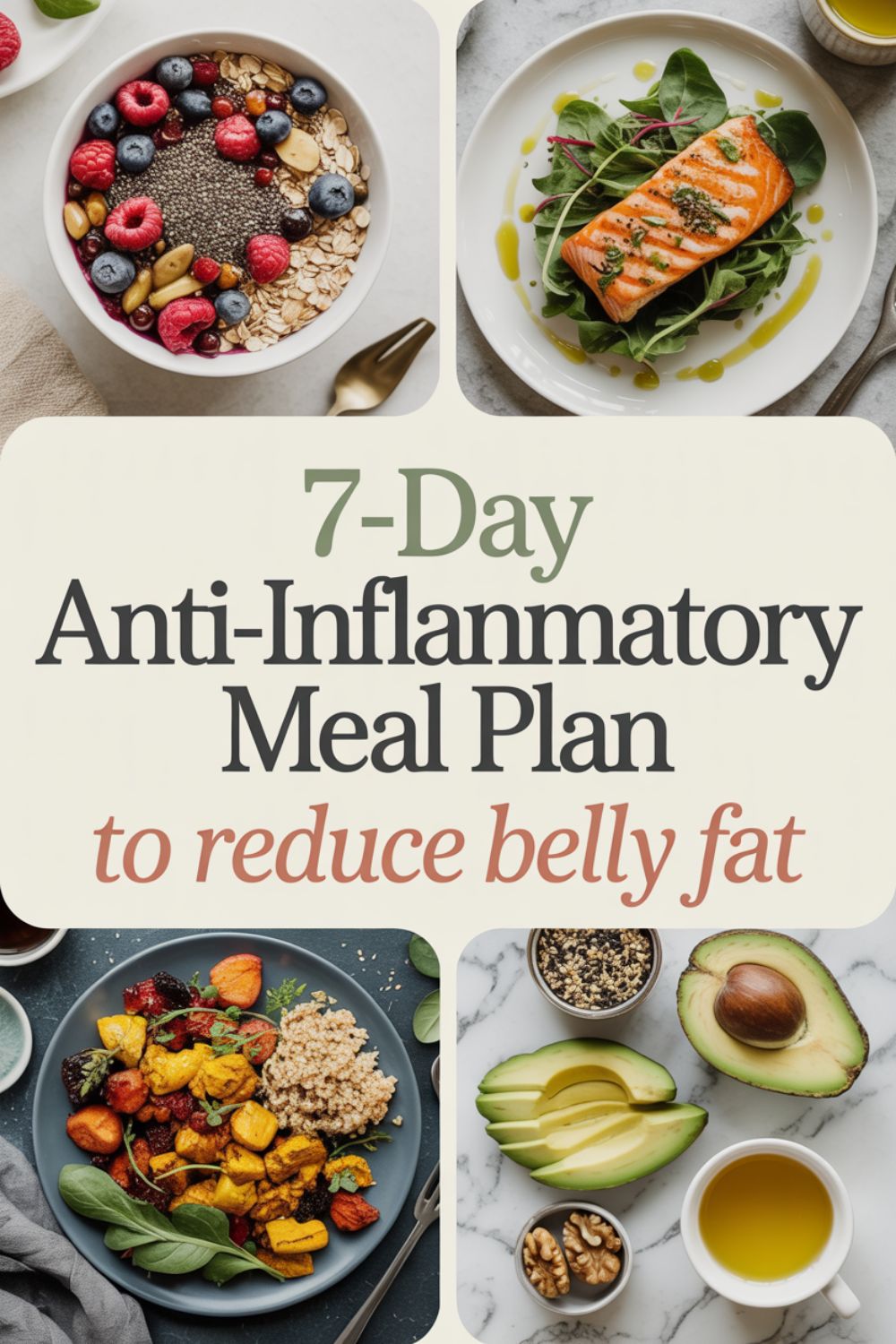
Why Anti-Inflammatory Eating Actually Works for Belly Fat
Okay, so here’s the deal with inflammation and belly fat—they’re basically best friends, and not in a good way. When your body’s constantly inflamed from processed foods, stress, and lack of sleep, it starts storing fat around your organs. Research from Johns Hopkins Medicine shows that chronic inflammation plays a significant role in weight gain, particularly in the abdominal area.
What makes this approach different from your standard “eat less, move more” advice is that we’re focusing on foods that naturally reduce inflammatory markers in your body. Think omega-3 rich fish, colorful vegetables packed with antioxidants, and healthy fats that actually help you burn fat. Sounds backwards, right? But that’s exactly what Mayo Clinic research supports—the right fats can decrease inflammation while supporting weight loss.
Your body isn’t stupid. When you feed it the right stuff, it stops holding onto excess fat for dear life. The inflammation goes down, your hormones start cooperating again, and suddenly that belly fat that seemed permanent? It starts melting off. No magic pills required.
Start tracking how you feel after meals this week. Bloating, fatigue, or brain fog within an hour of eating? That’s your body waving red flags about inflammatory foods. Your body’s smarter than any diet book.
The Science Behind Foods That Fight Inflammation
I’m not gonna bore you with a biochemistry lecture, but you should know why certain foods work. According to nutrition research published by Healthline, anti-inflammatory foods contain compounds that reduce oxidative stress and lower inflammatory markers like C-reactive protein (CRP).
The superstar players in this game include omega-3 fatty acids found in fatty fish and walnuts, polyphenols in berries and dark leafy greens, and monounsaturated fats in olive oil and avocados. These aren’t just trendy health food buzzwords—they’re nutrients that literally tell your cells to chill out and stop storing fat.
Here’s what I found fascinating: processed foods high in refined sugars and trans fats trigger inflammatory pathways that signal your body to store more abdominal fat. Meanwhile, whole foods rich in fiber and antioxidants do the opposite. It’s like your food is constantly sending text messages to your metabolism—we just need to make sure they’re saying the right things.
One more thing worth mentioning—turmeric and ginger aren’t just Instagram-worthy latte ingredients. Studies show that curcumin in turmeric and gingerol in ginger have legitimate anti-inflammatory properties that can support weight management. I keep both on hand and throw them into everything from morning smoothies to evening stir-fries.
Key Anti-Inflammatory Ingredients to Stock Up On
Before we dive into the meal plan, let’s talk about what should be in your kitchen. I’m a big believer in having the right ingredients on hand because last-minute grocery runs are where healthy eating plans go to die. Here’s what I always keep stocked:
- Fatty fish like wild-caught salmon, sardines, and mackerel—aim for at least three servings per week
- Colorful vegetables including leafy greens, bell peppers, broccoli, and Brussels sprouts
- Healthy fats such as extra virgin olive oil, avocados, nuts (especially walnuts and almonds), and seeds
- Whole grains like quinoa, brown rice, and oats—these provide sustained energy without blood sugar spikes
- Berries of all kinds—blueberries, strawberries, raspberries—loaded with antioxidants
- Spices and herbs including turmeric, ginger, garlic, cinnamon, and fresh herbs like cilantro and parsley
- Legumes such as lentils, chickpeas, and black beans for plant-based protein and fiber
Now, I’m not saying you need to buy everything organic or shop at fancy specialty stores. Regular grocery stores have everything you need. Just focus on whole foods that look like they came from nature, not a laboratory. If you can afford to splurge anywhere, make it the fish—quality matters with seafood.
For breakfast lovers like me, Get Full Recipe for my go-to anti-inflammatory smoothie bowl that takes five minutes and keeps you full until lunch. It’s become such a staple in my routine that I prep the ingredients Sunday night and just blend each morning.
Your Complete 7-Day Meal Plan
Alright, here’s where the rubber meets the road. This meal plan is designed to be realistic—meaning you won’t need three hours of meal prep or ingredients from five different specialty stores. Each day provides roughly 1,800-2,000 calories with a solid balance of protein, healthy fats, and complex carbs. Adjust portions based on your activity level and goals.
Breakfast: Overnight oats with blueberries, walnuts, and a drizzle of honey. I use this mason jar set because it makes meal prep stupid easy—just layer everything the night before.
Lunch: Mediterranean quinoa bowl with chickpeas, cucumber, tomatoes, red onion, feta cheese, and lemon-tahini dressing
Dinner: Grilled salmon with roasted Brussels sprouts and sweet potato. Pro tip: I season everything with this herb blend that’s basically magic in a bottle.
Snack: Sliced apple with almond butter
Breakfast: Green smoothie with spinach, banana, mango, ginger, and hemp seeds. Blend it in this personal blender that actually gets the leafy greens smooth.
Lunch: Turkey and avocado lettuce wraps with sliced bell peppers and hummus on the side
Dinner: Turmeric chicken stir-fry with broccoli, snap peas, and brown rice. Get Full Recipe for the stir-fry sauce that makes vegetables taste like they’re from a restaurant.
Snack: Mixed berries with a handful of raw almonds
Breakfast: Scrambled eggs with sautéed spinach and mushrooms, served with whole-grain toast
Lunch: Lentil and vegetable soup with a side of mixed green salad
Dinner: Baked cod with roasted rainbow carrots and quinoa. I always keep these sheet pans on hand for easy cleanup—just line with parchment and you’re done.
Snack: Celery sticks with cashew butter
Speaking of lentils, if you’re looking for more plant-based options that still pack serious protein, you’ll want to check out these high-protein vegetarian meals that don’t taste like cardboard.
Breakfast: Greek yogurt parfait with sliced strawberries, chia seeds, and a sprinkle of cinnamon
Lunch: Grilled chicken Caesar salad with homemade dressing (skip the croutons, add extra veggies)
Dinner: Slow-cooker Mediterranean beef stew with tons of vegetables. Get Full Recipe for this set-it-and-forget-it dinner that makes your house smell amazing.
Snack: Sliced bell peppers with guacamole
Breakfast: Sweet potato toast topped with mashed avocado, hemp seeds, and a poached egg
Lunch: Tuna salad stuffed in bell pepper halves with mixed greens on the side
Dinner: Sheet pan chicken thighs with roasted cauliflower, red onion, and cherry tomatoes, seasoned with za’atar
Snack: A small bowl of mixed nuts and dark chocolate chips (yes, dark chocolate is anti-inflammatory!)
Batch cook your proteins on Sunday. Grill three different types of fish or chicken, portion them out, and you’ve just eliminated the “what’s for dinner” panic for half the week.
Breakfast: Anti-inflammatory golden milk smoothie with banana, coconut milk, turmeric, ginger, and a date for sweetness
Lunch: Spinach and feta stuffed chicken breast with roasted zucchini
Dinner: Shrimp and vegetable curry over cauliflower rice. Trust me, if you haven’t tried cauliflower rice yet, get this rice processor—it makes everything so much faster.
Snack: Cucumber slices with tzatziki
Breakfast: Veggie-packed omelet with tomatoes, peppers, onions, and a side of fresh berries
Lunch: Buddha bowl with roasted chickpeas, tahini sauce, mixed greens, shredded cabbage, and avocado
Dinner: Herb-crusted salmon with asparagus and wild rice. Get Full Recipe for the herb crust that makes even salmon-skeptics convert.
Snack: Green apple slices with sunflower seed butter
By day seven, most people tell me they’re already feeling less bloated and more energized. One woman from our community, Sarah, tried this plan and lost 15 pounds in three months while sticking to these principles—and she said the best part was never feeling deprived or hangry.
Meal Prep Essentials Used in This Plan
Look, I get it—meal prep can feel overwhelming. But having the right tools honestly makes the difference between actually following through and ordering takeout on Tuesday. Here’s what I personally use and recommend:
Physical Products That Make Life Easier
- Glass meal prep containers (5-pack) – These have literally changed my life. Microwave-safe, dishwasher-friendly, and they don’t stain like plastic. I prep Sunday’s dinners in these and grab-and-go all week.
- High-speed blender – Not all blenders are created equal, trust me. After burning through two cheap ones, I invested in a quality blender and it’s paid for itself in saved smoothies alone.
- Cast iron skillet set – Perfect for everything from searing salmon to roasting vegetables. They distribute heat evenly and actually get better with age, unlike my gym membership.
Digital Resources Worth Having
- 30-Day Anti-Inflammatory Meal Plan PDF – Includes shopping lists, prep guides, and 90+ recipes that follow these same principles. Honestly saved me hours of planning.
- Printable Meal Prep Checklist Bundle – Color-coded checklists that keep you organized. I stick mine on the fridge and check things off—oddly satisfying.
- Anti-Inflammatory Food Swap Guide – Downloadable chart showing exactly what to eat instead of inflammatory foods. Game-changer when you’re grocery shopping.
Want more support? I’ve got a WhatsApp community where people share their meal prep wins, recipe tweaks, and honestly just vent about their struggles. It’s free and drama-free—just real people trying to eat better. Sometimes having others in the same boat makes all the difference.
Tools & Resources That Make Cooking Easier
Beyond meal prep containers, there are a few kitchen tools that have seriously streamlined my cooking process. These aren’t must-haves, but they’re nice-to-haves that make anti-inflammatory cooking way less of a chore.
Kitchen Gadgets That Actually Get Used
- Instant-read meat thermometer – No more overcooked, dry salmon. This takes the guesswork out of cooking fish and chicken perfectly every single time.
- Spiralizer for veggie noodles – Turn zucchini into noodles in seconds. It’s not trying to replace regular pasta, but it’s a solid way to sneak more vegetables into dinner.
- Silicone baking mats (2-pack) – I use these on everything except cereal bowls. Zero sticking, zero scrubbing. They’ve eliminated so much cleanup frustration from my life.
Digital Tools for Planning
- Weekly Meal Planning Template – Digital planner that syncs with your phone. Plug in your meals, and it auto-generates a shopping list. FYI, this has cut my grocery store wandering time in half.
- Macro Calculator & Tracking Guide – If you want to dial in your nutrition, this helps you figure out the right portions without becoming obsessive about it.
- 50 Anti-Inflammatory Snack Ideas eBook – Because 3 PM hunger is real and we need better options than vending machine chips.
These aren’t affiliate links to junk you don’t need—they’re honestly the stuff I reach for multiple times per week. But don’t feel like you need everything at once. Start with the basics and add as you go.
Smart Substitutions That Keep You On Track
Life happens. You run out of salmon, the store’s out of quinoa, or you just really don’t like Brussels sprouts (valid). Here’s the beautiful thing about anti-inflammatory eating—it’s flexible. The key is understanding the principles so you can make smart swaps.
Don’t have salmon? Any fatty fish works—mackerel, sardines, or even canned tuna packed in olive oil. Hate quinoa? Brown rice, farro, or even regular oats provide similar benefits. Can’t stand leafy greens? Focus on other colorful vegetables like bell peppers, tomatoes, and carrots—variety matters more than eating the exact same “superfoods” every day.
For those watching their budget, frozen vegetables and fish are totally fine—sometimes even better since they’re frozen at peak freshness. I keep frozen wild-caught salmon fillets, mixed berries, and organic spinach in my freezer at all times. They’re backup singers that can become the lead act when fresh ingredients aren’t available.
Need more ideas for quick and healthy meal swaps? Check out these 15-minute anti-inflammatory dinners that prove healthy eating doesn’t have to be time-consuming.
What to Avoid: The Inflammation Culprits
Okay, real talk time. While we’re focusing on what to add to your diet, we also need to address the elephant in the room—foods that actively promote inflammation. I’m not here to be the fun police, but knowledge is power, right?
The biggest offenders are refined sugars and carbohydrates, trans fats (anything with “partially hydrogenated oil” on the label), excessive alcohol, and processed meats like bacon and deli meats. These foods trigger inflammatory responses that basically cancel out all the good work you’re doing with salmon and spinach.
Here’s where it gets interesting though—dairy is controversial. Some people do fine with it, others find it inflammatory. Same with gluten and nightshade vegetables. Your body is unique, which is why I always suggest doing a mini elimination experiment. Cut something out for two weeks and see how you feel. Your body will tell you what it needs if you actually listen.
I’m not saying you can never have pizza or a beer again. I’m saying if you’re eating inflammatory foods at every meal, don’t be surprised when your body stays inflamed and that belly fat doesn’t budge. It’s about the 80/20 rule—eat clean 80% of the time, and your body can handle the occasional indulgence without throwing a fit.
Keep a simple food journal for two weeks. Note what you eat and how you feel 2-3 hours later. Patterns emerge fast—bloating, energy crashes, or feeling amazing all point you toward what works for YOUR body.
The Role of Hydration in Reducing Inflammation
I know, I know—everyone tells you to drink more water. But seriously, dehydration itself is inflammatory. Your body needs adequate water to flush out toxins, transport nutrients, and keep your metabolism humming along. Aim for at least eight glasses daily, more if you’re active or live in a hot climate.
Here’s my trick: I fill up this motivational water bottle first thing in the morning with time markers on it. Sounds silly, but it works—I actually drink way more water when I can see my progress throughout the day.
Green tea and herbal teas count toward hydration too, plus they bring their own anti-inflammatory compounds to the party. I drink green tea in the morning for the gentle caffeine boost and antioxidants, then switch to ginger or turmeric tea in the afternoon. Coffee’s fine in moderation, but going overboard can increase cortisol and inflammation, so maybe cap it at two cups.
Looking for more beverage options that support your goals? These anti-inflammatory smoothie recipes are basically nutrition bombs disguised as delicious drinks.
Beyond Food: Lifestyle Factors That Matter
Here’s something most meal plans won’t tell you—you can eat perfectly and still struggle with inflammation if other parts of your life are a mess. Sleep, stress, and movement all play massive roles in how your body responds to food.
Chronic stress keeps your cortisol elevated, which directly promotes belly fat storage and inflammation. It’s why stressed-out people can eat the same diet as chill people and have completely different results. I’m not saying you need to become a meditation guru, but finding some way to manage stress—whether that’s yoga, walking, journaling, or just saying no to things more often—is non-negotiable.
Sleep is where the magic happens. Seven to nine hours of quality sleep allows your body to repair, your hormones to balance, and inflammation to naturally decrease. When you’re sleep-deprived, your body ramps up inflammatory markers and cravings for sugary, inflammatory foods. It’s a vicious cycle.
Movement doesn’t mean you need to kill yourself at the gym. In fact, over-exercising can be inflammatory too. Moderate exercise—like walking, swimming, yoga, or light strength training—reduces inflammation and supports weight loss without beating up your body. I aim for 30 minutes of activity most days, and honestly, a walk while listening to a podcast counts.
For workout inspiration that complements this eating style, check out these low-impact exercises for weight loss that won’t leave you destroyed but still deliver results.
Tracking Progress the Right Way
Let’s talk about measuring success, because if you’re only focused on the scale, you’re missing the bigger picture. Yes, you’ll likely lose weight and inches around your waist following this plan. But the real wins are often more subtle and way more important.
Pay attention to how you feel. Are you waking up with more energy? Do you feel less bloated after meals? Is your brain fog lifting? Are your joints feeling better? These are all signs that inflammation is decreasing, even if the scale hasn’t moved much yet. Trust me, the scale will catch up.
Take measurements and progress photos if you want tangible evidence. Sometimes the scale doesn’t budge but you lose inches because muscle weighs more than fat and takes up less space. I learned this the hard way after getting frustrated with “slow” progress, only to realize my jeans fit totally differently.
Blood work is the gold standard if you really want to see what’s happening inside. Markers like CRP (C-reactive protein), fasting insulin, and hemoglobin A1C can show you exactly how much inflammation you’re carrying and how it changes over time. Ask your doctor to run these before starting and then again after 12 weeks.
Making It Sustainable Long-Term
The biggest mistake people make with any eating plan is treating it like a temporary fix. You do it for a few weeks, see results, then go back to old habits and wonder why the weight comes back. This has to become your new normal, not a phase.
The good news? Anti-inflammatory eating isn’t restrictive or miserable. You’re eating real, delicious food—just being strategic about it. Once you get through the first few weeks and your taste buds adjust, processed junk honestly stops tasting as good. Your body starts craving the foods that make it feel good.
Build in flexibility from the start. If you love pizza, figure out how to make a healthier version with cauliflower crust and tons of vegetables. Craving something sweet? Dark chocolate, berries with coconut cream, or homemade energy balls can satisfy that without derailing everything. Perfection isn’t the goal—consistency is.
Find your support system, whether that’s an online community, a friend doing this with you, or just a partner who agrees not to bring tempting junk food into the house. When everyone around you is eating inflammatory crap and you’re trying to stick to your plan, it’s exponentially harder. IMO, your environment matters more than willpower.
For long-term meal planning strategies that actually work, browse through this collection of 30-day meal plans that take the guesswork out completely.
Frequently Asked Questions
How quickly will I see results with this anti-inflammatory meal plan?
Honestly, it varies person to person. Most people notice reduced bloating and increased energy within the first week. Visible belly fat reduction typically shows up around week 3-4 with consistent adherence. Remember, we’re targeting inflammation first—the fat loss is a happy side effect that follows.
Can I follow this plan if I’m vegetarian or vegan?
Absolutely! Just swap the fish and chicken for plant-based proteins like tempeh, tofu, lentils, and chickpeas. Make sure you’re getting enough omega-3s from sources like chia seeds, flaxseeds, and walnuts. The principles remain the same—focus on whole, minimally processed foods that fight inflammation.
Do I need to count calories on this plan?
Not necessarily. This plan naturally regulates portions through whole foods and protein at every meal, which keeps you satisfied. That said, if you’re not seeing results after a few weeks, tracking portions for a week can reveal if you’re overeating—even healthy food has calories. But start by just following the plan as written and let your hunger guide you.
What if I have food allergies or sensitivities?
The beauty of this approach is its flexibility. Allergic to fish? Focus on plant-based omega-3s and lean poultry. Can’t do nuts? Seeds provide similar benefits. Gluten sensitivity? This plan is already mostly gluten-free with easy substitutions. The core principle is eating anti-inflammatory whole foods—the specific ingredients are swappable based on your needs.
Can I still eat out while following this plan?
Of course! Choose grilled fish or chicken, ask for extra vegetables instead of fries, request olive oil-based dressings, and skip the bread basket. Mediterranean, Asian, and Mexican restaurants often have great anti-inflammatory options. Don’t stress about being perfect when dining out—one meal won’t derail your progress if you’re consistent the rest of the time.
Your Next Steps Forward
Look, I’ve given you the roadmap. You’ve got a complete 7-day meal plan, shopping lists basically built in, and all the science backing why this works. But here’s the thing—none of it matters if you don’t actually start.
Pick one day this week to do some basic meal prep. Just one. Cook some protein, chop some vegetables, portion things out. That single action will set you up for success better than reading a dozen more articles ever could. You don’t need perfect—you just need to begin.
The inflammation that’s been keeping that belly fat locked in place? It didn’t appear overnight, and it won’t vanish overnight either. But give your body two weeks of consistent anti-inflammatory eating and I guarantee you’ll feel the difference. Better energy, less bloating, clearer thinking, and yes, looser jeans.
Most people who stick with this for a month end up naturally continuing because they genuinely feel better. Your body starts craving the foods that serve it, and the old habits that kept you inflamed lose their appeal. It’s not about willpower forever—it’s about rewiring your taste buds and habits for a few weeks until this becomes your new normal.
So what are you waiting for? Take that first step. Your future self, standing in front of the mirror a month from now feeling confident and energized, will thank you for starting today.