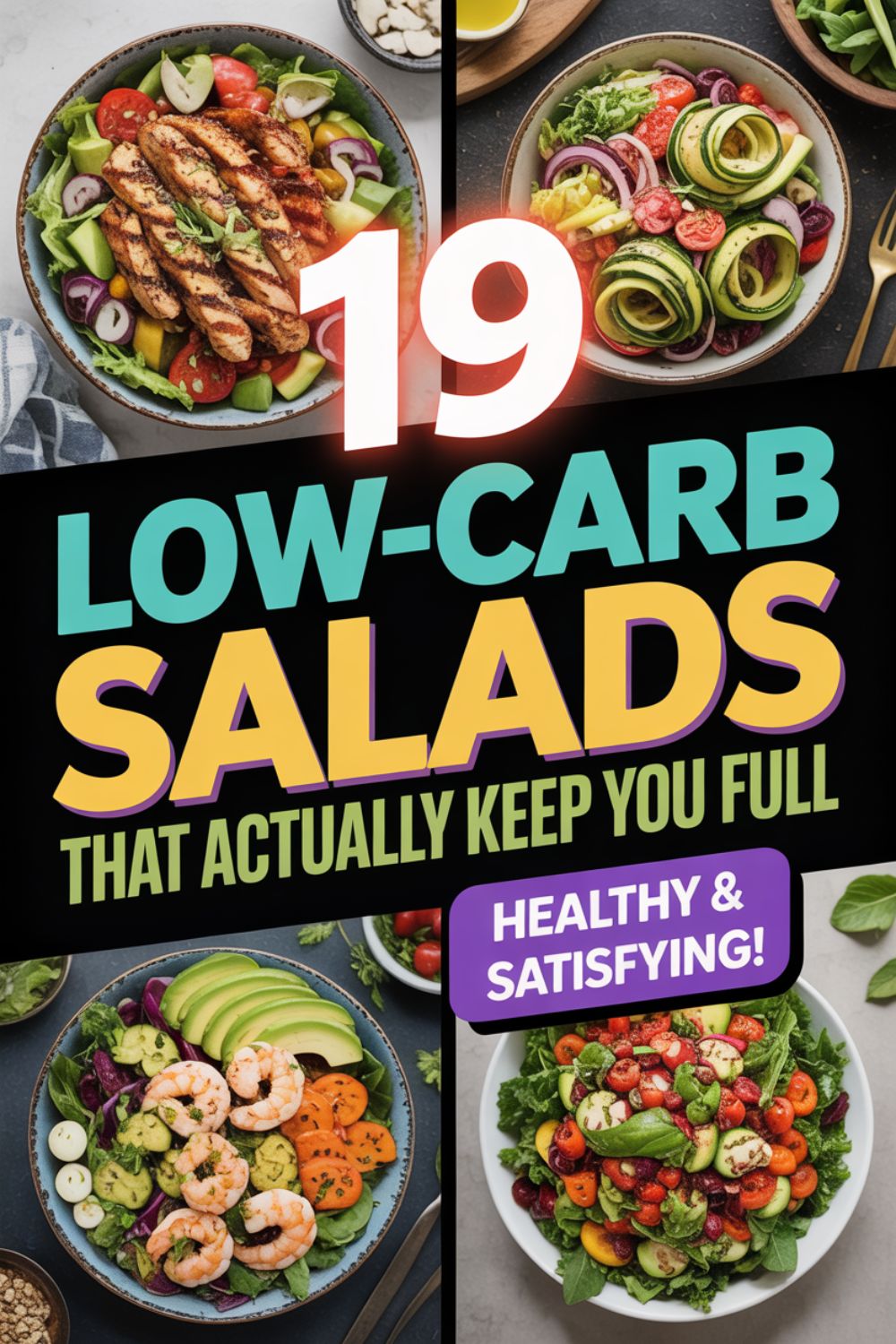
19 Low-Carb Salads That Actually Keep You Full
Look, I’m not going to sugarcoat it—most “low-carb salads” are a joke. You know the ones. A pile of iceberg lettuce, maybe some cucumber slices if you’re lucky, drizzled with a sad vinaigrette that tastes like regret. You eat the whole thing, feel proud of yourself for exactly thirty-seven minutes, then find yourself elbow-deep in a bag of chips because your body is screaming for actual sustenance.
Here’s the thing nobody tells you about low-carb eating: it’s not about removing carbs, it’s about replacing them strategically. And salads? They can absolutely be satisfying, filling, stick-to-your-ribs meals—if you build them right. We’re talking protein, healthy fats, fiber-rich veggies, and enough variety that you won’t get bored by day three.
I’ve spent the better part of two years experimenting with low-carb salads that don’t leave me hungry an hour later. Some were disasters (looking at you, plain spinach with lemon juice). Others became weekly staples. What I learned is that the secret to a truly filling salad isn’t rocket science—it’s understanding how fiber and protein work together to keep you satisfied.
Why Most Low-Carb Salads Fail (And What Actually Works)
Before we get into the good stuff, let’s talk about why so many people abandon low-carb salads after a week. The problem isn’t you—it’s the formula.
Most recipes treat protein and fat like afterthoughts. They’ll tell you to toss in “some grilled chicken” or “a handful of nuts” without specifying amounts. But here’s what nutrition experts at MedlinePlus confirm: you need adequate protein in your salads to make them filling meals. We’re talking 25-40 grams per serving, not the measly 8 grams you get from a tablespoon of chickpeas.
The second issue? Volume. Your stomach has stretch receptors that signal fullness, and a cup of arugula ain’t gonna cut it. You need bulk—fibrous vegetables, leafy greens, crunchy toppings—to create that physical sensation of being satisfied. According to research on satiety, foods with low energy density but high volume are particularly effective at promoting fullness without excessive calories.
Third problem: bland-ass dressing. I don’t care how “healthy” your salad is—if it tastes like punishment, you won’t stick with it. You need fat for flavor and for absorbing fat-soluble vitamins. That means real olive oil, not the spray-on nonsense. Avocado. Nuts. Seeds. Cheese, even.
The Anatomy of a Actually-Filling Low-Carb Salad
Here’s my formula, refined through way too many disappointing lunch breaks. Every satisfying low-carb salad needs these five components:
1. A Protein Foundation (25-40 grams)
This is non-negotiable. We’re talking grilled chicken thighs (way more flavorful than breast), hard-boiled eggs, canned salmon, grilled shrimp, or a thick slice of seared tuna. For plant-based folks, tempeh or a generous portion of hemp seeds works wonders. The protein slows digestion and triggers satiety hormones—that’s why you feel full longer.
I prep my proteins using this compact air fryer because it requires zero babysitting. Toss in chicken thighs with some seasoning, set the timer, and you’re done. No oil splatter, no pan-watching, no regrets.
2. Healthy Fats for Satiety
Fats get a bad rap, but they’re essential for keeping you satisfied. Half an avocado, a palmful of walnuts, a tablespoon of tahini in your dressing, or crumbled feta all work. These fats help your body absorb vitamins A, D, E, and K from all those vegetables you’re eating.
One of my favorite tricks? Toasting nuts in a pan until fragrant. Takes three minutes and makes them taste ten times better. I use this small non-stick pan exclusively for nuts and seeds—it heats evenly and nothing burns.
3. Fiber-Packed Vegetables
This is where you get creative. Dark leafy greens like kale, spinach, and arugula are staples, but don’t sleep on cruciferous vegetables. Broccoli, cauliflower, Brussels sprouts—they’re all low in net carbs but high in fiber. Throw in some bell peppers for crunch, cherry tomatoes for sweetness, and cucumber for hydration.
The key is variety. Different vegetables provide different nutrients and textures, which keeps your taste buds engaged. If you’re eating the same salad every day, you’ll burn out fast.
4. Texture Add-Ins
Nobody wants to eat baby food. You need crunch, chew, something interesting happening in every bite. Toasted pumpkin seeds, crispy chickpeas (made in the air fryer), sliced radishes, jicama sticks, or even a few pork rinds if you’re feeling bold. Texture makes food more satisfying—it’s psychology as much as nutrition.
I make crispy chickpeas in batches using this silicone baking mat—nothing sticks, and cleanup is literally just rinsing it off. No scrubbing required.
5. A Killer Dressing
This makes or breaks the whole operation. My go-to formula: three parts oil (olive, avocado, or walnut) to one part acid (lemon juice, apple cider vinegar, or balsamic), plus Dijon mustard for emulsification, minced garlic, salt, pepper, and whatever herbs I’m feeling that day.
Skip the bottled stuff—it’s loaded with sugar and vegetable oils that go rancid. Making dressing takes ninety seconds if you have a decent immersion blender. Dump everything in a jar, blend, done.
19 Low-Carb Salads That’ll Actually Keep You Satisfied
1. Mediterranean Protein Power Bowl
Grilled chicken thighs over romaine, cherry tomatoes, cucumber, kalamata olives, red onion, crumbled feta, and a lemon-oregano vinaigrette. The combination of protein from chicken and feta, plus healthy fats from olives and olive oil, creates serious staying power. Around 35 grams of protein, 8 net carbs.
If you like this flavor profile, you’ll probably dig this Mediterranean Chickpea Salad — Get Full Recipe.
2. Cobb Salad Done Right
Romaine, grilled chicken, hard-boiled eggs, bacon (the good stuff, not the pre-cooked nonsense), avocado, cherry tomatoes, and blue cheese. Classic for a reason. The egg yolks add richness and extra fat-soluble vitamins. Just go easy on the bacon or you’ll blow through your sodium budget.
I chop all my Cobb ingredients using this rocking chopper knife—way faster than a regular knife and my fingers stay intact.
3. Asian Sesame Steak Salad
Thinly sliced seared steak (flank or skirt works great) over mixed greens, shredded red cabbage, edamame, sliced cucumber, and scallions. Dress with a sesame-ginger vinaigrette made with toasted sesame oil, rice vinegar, grated ginger, and a touch of coconut aminos instead of soy sauce for less sodium.
The edamame adds plant-based protein and fiber, while the steak brings iron and B vitamins. About 32 grams of protein, 10 net carbs.
4. Tuna Nicoise Without the Potatoes
Seared tuna (or canned if you’re being practical), hard-boiled eggs, green beans, cherry tomatoes, kalamata olives, and anchovies if you’re into that. Dressed with a Dijon vinaigrette. The anchovies add umami and omega-3s—don’t skip them just because they sound weird.
For more quick protein-packed options, check out these high-protein low-carb meals that work for busy schedules.
5. Kale Caesar with Grilled Salmon
Massaged kale (yes, actually massage it with a bit of salt and lemon juice to break down the tough fibers), grilled salmon, shaved Parmesan, and a creamy Caesar made with Greek yogurt instead of mayo. The yogurt adds extra protein and probiotics while keeping things tangy.
Salmon brings omega-3 fatty acids and about 25 grams of protein per fillet. The kale provides vitamin K and calcium. Around 12 net carbs with the yogurt-based dressing.
6. Southwest Chicken Fiesta
Grilled chicken, romaine, black beans (in moderation—they’ve got carbs but also tons of fiber), corn (just a tablespoon for flavor), avocado, pico de gallo, and a cilantro-lime dressing. Top with crispy tortilla strips made from low-carb tortillas cut and baked until crunchy.
The black beans add resistant starch, which feeds your gut bacteria. Keep the portion to a quarter cup and you’re looking at about 15 net carbs total.
7. Greek Goddess Grain-Free Bowl
Spinach, grilled lamb or beef, cucumber, tomatoes, red onion, feta, and a creamy tzatziki dressing made with full-fat Greek yogurt, grated cucumber, garlic, and dill. The lamb brings a different flavor profile than chicken—gamey, rich, satisfying.
Speaking of satisfying meals, these low-carb comfort foods hit the spot when you’re craving something hearty but want to keep carbs in check.
8. Shrimp and Avocado Citrus Salad
Butter lettuce, grilled shrimp, avocado, grapefruit segments, sliced radishes, and a citrus vinaigrette. The grapefruit adds a tart sweetness without many carbs, and the bitterness actually complements the rich avocado and shrimp.
Shrimp cook in literally three minutes. I use this countertop grill pan and they’re done before my vegetables are even chopped.
9. Buffalo Chicken Ranch
Shredded chicken tossed in buffalo sauce over romaine, celery, shredded carrots, blue cheese crumbles, and a ranch dressing made with sour cream and fresh herbs. The heat from the buffalo sauce is oddly satisfying and the celery provides crunch and hydration.
Make your own ranch—it’s stupid easy and tastes infinitely better. This handheld frother emulsifies dressings in seconds and costs less than a fancy coffee.
10. Italian Antipasto Power Salad
Mixed greens, salami, provolone, marinated artichoke hearts, roasted red peppers, cherry tomatoes, pepperoncini, and an Italian vinaigrette. All the best parts of an antipasto platter without the crackers and bread.
The marinated vegetables add tons of flavor, and the cured meats bring salt and fat that make this incredibly satisfying. Around 8 net carbs.
Meal Prep Essentials Used in These Salads
Here’s what actually lives in my kitchen for making these salads happen without losing my mind:
Physical Products:
- Glass meal prep containers with divided compartments — Keep your lettuce separate from wet ingredients so nothing gets soggy. I’ve tried every brand and these are the only ones that don’t leak.
- Salad spinner with pull cord — Dry greens = dressing that actually sticks. Wet greens = watery disappointment. This one’s huge, collapses for storage, and the pull cord beats hand-cranking.
- Wide-mouth mason jars for layered salads — Dressing on bottom, hearty veggies in middle, greens on top. Flip and shake when ready to eat. Perfect for taking to work.
Digital Products & Resources:
- Complete Low-Carb Salad Formula eBook — Step-by-step guide with 50+ combinations, macro breakdowns, and a meal prep schedule that doesn’t assume you have four hours on Sunday.
- Dressing Recipe Collection PDF — 30 sugar-free dressings with shelf life info and flavor pairing suggestions. Never buy bottled dressing again.
- Low-Carb Grocery Shopping List Template — Organized by store section so you’re not wandering around like a lost tourist. Includes brand recommendations and price comparisons.
Join the Community: We’ve got a WhatsApp group for meal prep tips, recipe swaps, and general low-carb commiseration. Real people, real results, zero judgment.
11. Warm Bacon and Egg Spinach Salad
Baby spinach wilted slightly by warm bacon fat, chopped hard-boiled eggs, crispy bacon, sliced mushrooms, and a warm Dijon vinaigrette. This is more of a wilted salad situation—the warm fat and dressing barely cook the spinach, making it tender and easier to digest.
The combination of warm and cool textures makes this feel special, like something you’d order at a restaurant. About 6 net carbs, 28 grams of protein.
12. Thai Peanut Chicken Crunch
Shredded rotisserie chicken (because who has time), napa cabbage, shredded carrots, cilantro, crushed peanuts, and a peanut-lime dressing made with natural peanut butter, lime juice, coconut aminos, and a touch of sriracha.
The cabbage provides serious crunch and fiber without many carbs. Natural peanut butter brings protein and healthy fats. Keep portions honest—peanut butter is calorie-dense. Around 14 net carbs.
If you’re into Asian-inspired flavors, you might also enjoy these easy low-carb meals that cover all kinds of cravings.
13. Caprese with Grilled Chicken
The classic Italian salad gets a protein upgrade. Grilled chicken, fresh mozzarella, heirloom tomatoes, basil, and a balsamic reduction drizzled over everything. Simple, elegant, and surprisingly filling thanks to the cheese and chicken combo.
Use real buffalo mozzarella if you can find it—the texture is creamy and luxurious in a way that regular mozzarella can’t match. About 9 net carbs.
14. Smoked Salmon and Cucumber Dill Salad
Mixed greens, smoked salmon, cucumber ribbons, red onion, capers, and a dill-yogurt dressing. The smoked salmon brings serious flavor and omega-3s, while the cucumber adds hydration and crunch without carbs.
Capers are underrated—they’re basically flavor bombs that add saltiness and complexity. Don’t skip them. Around 7 net carbs, 24 grams of protein.
15. Steak Fajita Bowl
Sliced flank steak, sautéed bell peppers and onions, romaine, guacamole, sour cream, salsa, and a squeeze of lime. All the fajita flavors without the tortilla. The sautéed vegetables add a different texture than raw—softer, sweeter, more complex.
I cook the peppers and onions in this cast iron skillet until they’re slightly charred. The caramelization adds depth that raw vegetables can’t provide.
16. Waldorf-Inspired Chicken Salad
Shredded chicken, celery, apples (in moderation), walnuts, and a Greek yogurt-based dressing with a touch of Dijon and lemon. The apples add sweetness and crunch—just keep it to a quarter cup diced to manage carbs.
Walnuts provide omega-3 fatty acids and that satisfying crunch. This tastes like fall in a bowl. Around 13 net carbs with the apple.
For more ideas on balancing nutrition and flavor, these hormone-balancing recipes focus on whole foods that support overall health.
17. Autumn Harvest with Pork Tenderloin
Sliced pork tenderloin, arugula, roasted Brussels sprouts, dried cranberries (just a tablespoon), pecans, and a maple-Dijon vinaigrette made with sugar-free maple syrup. The Brussels sprouts add a nutty, almost sweet flavor when roasted until crispy.
Pork tenderloin is lean, flavorful, and criminally underused. It cooks fast and stays tender if you don’t overcook it. Around 15 net carbs with the cranberries.
18. Zucchini Noodle Caprese
Spiralized zucchini, cherry tomatoes, mini mozzarella balls, basil, grilled chicken, and a pesto dressing. The zucchini noodles add volume and texture without the carbs of pasta. Toss them raw or quickly sauté to soften slightly.
I spiralize zucchini using this handheld spiralizer—it’s small, stores easily, and doesn’t require countertop space like those massive machines.
19. Everything Bagel Chicken Salad
Mixed greens, grilled chicken, hard-boiled eggs, cucumber, red onion, and everything bagel seasoning sprinkled over the top with a cream cheese-based dressing. It tastes like a deconstructed bagel and lox situation but without the bread.
The everything bagel seasoning adds so much flavor for basically zero carbs. You can buy it or make your own with sesame seeds, poppy seeds, dried garlic, dried onion, and salt. Around 8 net carbs.
Looking for more meal variety? These low-carb family dinners work for everyone at the table, not just the person counting carbs.
Tools & Resources That Make Low-Carb Cooking Easier
These aren’t fancy gadgets collecting dust—they’re things I actually use multiple times per week:
Physical Products:
- Digital kitchen scale — Eyeballing portions is how you accidentally eat 600 calories of “healthy” nuts. This one’s accurate, easy to clean, and switches between grams and ounces.
- Microplane grater for garlic and ginger — Fresh garlic and ginger transform dressings from mediocre to restaurant-quality. This grates them into a paste in seconds.
- Set of small glass bowls for mise en place — Fancy term for “everything chopped and ready before you start cooking.” Makes meal prep feel less chaotic and more zen.
Digital Products & Resources:
- Low-Carb Macro Calculator Spreadsheet — Plug in your ingredients, get instant macro breakdowns. Way easier than tracking everything manually or relying on apps that have questionable data.
- Weekly Meal Planning Template — Drag-and-drop system with grocery list auto-generation. Saves me at least an hour every Sunday.
- Printable Salad Combination Chart — Mix-and-match grid showing which proteins, fats, and vegetables pair well. Prevents decision fatigue when you’re staring into the fridge at 7 PM.
Common Low-Carb Salad Mistakes (And How to Avoid Them)
Mistake #1: Not Enough Protein
You need more than you think. A couple of tablespoons of chickpeas isn’t cutting it. Aim for a palm-sized portion of meat, fish, or tofu—about 4-6 ounces. Your body needs amino acids to build and repair tissue, and protein triggers hormones that signal fullness.
If you’re plant-based, combine incomplete proteins (like beans and seeds) to get all essential amino acids in one meal.
Mistake #2: Fat-Free Everything
Fat isn’t the enemy. It slows digestion, helps absorb vitamins, and makes food taste good. A tablespoon of olive oil has about 120 calories, but it makes your salad satisfying enough that you won’t raid the pantry an hour later. That’s a trade-off worth making.
Plus, many vitamins are fat-soluble—meaning your body can’t use them without dietary fat present. That expensive organic kale is wasted if you’re not eating it with some avocado or nuts.
Mistake #3: Boring Vegetables
Iceberg lettuce and cucumber every single day will make you quit low-carb faster than anything. Rotate your vegetables. Try bitter greens like endive, peppery arugula, crunchy fennel, or roasted vegetables for a different texture and flavor profile.
Different colors mean different phytonutrients—you want variety to cover all your nutritional bases. Plus, food should be interesting. Life’s too short for boring salads.
Mistake #4: Overdoing “Low-Carb” Toppings
Cheese, nuts, and seeds are low in carbs but high in calories. It’s easy to add 400 calories of toppings to a salad without realizing it. Measure at first until you develop an intuitive sense of portion sizes. That quarter cup of almonds? Smaller than you think.
I keep portions honest by using these small prep bowls for toppings. One bowl = one portion. No guessing, no overpouring.
Making It Work in Real Life
Theory is great, but execution is where most people stumble. Here’s how I actually make this sustainable without turning into a meal prep robot who spends all Sunday in the kitchen.
Batch Cooking Proteins
Pick two or three proteins per week and cook them all at once. I usually do chicken thighs, hard-boiled eggs, and either salmon or steak. Store them separately and mix throughout the week. This prevents flavor fatigue and gives you options.
Chicken thighs in the air fryer take twenty minutes. Eggs in the Instant Pot take six minutes plus natural release. Salmon on a sheet pan takes twelve minutes at 400°F. You can have all your proteins done in less than an hour if you stagger them.
Prep Vegetables Smart
Some vegetables last longer prepped, some don’t. Heartier greens like kale and cabbage can be washed, dried, and stored for days. Delicate lettuce gets slimy fast—leave that whole until you’re ready to use it.
Chop sturdy vegetables like bell peppers, cucumbers, and radishes early in the week. Store them separately in containers with paper towels to absorb excess moisture. Cherry tomatoes stay whole—they get mushy when cut too far in advance.
For additional prep strategies that save time during the week, check out these low-carb meal prep recipes designed for busy schedules.
Make Multiple Dressings
Having five different dressings in the fridge means the same base salad can taste completely different each day. Make a classic vinaigrette, a creamy ranch, an Asian sesame, a Caesar, and a balsamic. Takes about twenty minutes total and transforms your meal prep game.
Most dressings last at least a week, some longer. Always smell before using—your nose knows if something’s gone off.
The Mason Jar Method
Layer salads in wide-mouth jars: dressing on bottom, hearty vegetables in the middle (things that won’t get soggy like cucumbers, chickpeas, or bell peppers), protein next, then greens on top. When you’re ready to eat, dump it in a bowl and toss. Nothing gets soggy because the wet and dry ingredients don’t touch until serving.
I make five jars every Sunday for weekday lunches. Grab one on your way out the door, and you’ve got a complete meal that didn’t cost $15 at a restaurant.
Dressing Recipes That Don’t Suck
Bottled dressings are usually loaded with sugar, soybean oil, and preservatives. Making your own takes minutes and tastes infinitely better. Here are my most-used formulas:
Classic Red Wine Vinaigrette
Three parts olive oil, one part red wine vinegar, Dijon mustard, minced garlic, salt, pepper, dried oregano. Shake in a jar until emulsified. Lasts a week in the fridge.
Creamy Avocado-Lime
Half an avocado, juice of one lime, quarter cup Greek yogurt, handful of cilantro, minced garlic, salt, water to thin. Blend until smooth. Tastes like a lighter version of avocado crema. Use within three days.
Asian Sesame-Ginger
Toasted sesame oil, rice vinegar, grated fresh ginger, coconut aminos, lime juice, touch of fish sauce for umami. Whisk together. This one’s potent—a little goes a long way.
Greek Yogurt Ranch
Greek yogurt, sour cream, fresh dill, chives, garlic powder, onion powder, salt, pepper, splash of lemon juice. Mix and refrigerate for at least an hour to let flavors meld. Way better than the packet stuff.
Balsamic Reduction
This isn’t technically a dressing but works like one. Simmer balsamic vinegar in a small pan until it reduces by half and becomes syrupy. Drizzle over salads for intense flavor without much volume. Lasts forever in the fridge.
For more kitchen hacks and recipe variations, these lazy low-carb meals are perfect for nights when cooking feels like too much effort.
Frequently Asked Questions
Can I eat salad every day on a low-carb diet?
Absolutely, as long as you’re varying your ingredients. The key is rotating proteins, fats, and vegetables to ensure you’re getting a wide range of nutrients. Eating the same exact salad daily can lead to nutrient gaps and serious boredom. Mix it up with different greens, proteins, and dressings throughout the week.
How do I keep salads from getting soggy when meal prepping?
Store components separately or use the mason jar method—dressing on bottom, sturdy vegetables in middle, greens on top. Never dress a salad more than an hour before eating unless you’re using the jar technique. Also, make sure your greens are completely dry after washing. A salad spinner is worth the investment.
Are low-carb salads actually filling enough for a meal?
They absolutely can be if you build them correctly. You need adequate protein (25-40 grams), healthy fats, and enough volume to trigger fullness. A bowl of plain lettuce won’t cut it, but a salad with grilled chicken, avocado, nuts, and plenty of fibrous vegetables will keep you satisfied for hours. The combination of protein, fat, and fiber slows digestion and prevents blood sugar crashes.
What’s the best way to add protein to salads if I’m vegetarian?
Tempeh, hemp seeds, hard-boiled eggs, Greek yogurt-based dressings, cheese, nuts, and legumes all work great. Combine incomplete proteins—like beans with seeds or quinoa with vegetables—to get all essential amino acids in one meal. A quarter cup of hemp seeds alone provides about 10 grams of complete protein.
How many net carbs should a low-carb salad have?
It depends on your personal carb target, but most of these salads land between 6-15 net carbs. If you’re doing strict keto (under 20 grams daily), stick to the lower end with salads heavy on greens, protein, and fats. If you’re doing moderate low-carb (50-100 grams daily), you have more flexibility to add things like chickpeas or cherry tomatoes.
The Bottom Line
Low-carb salads don’t have to be sad desk lunches that leave you fantasizing about bread. When you build them with enough protein, healthy fats, and variety, they become genuinely satisfying meals that support your goals without feeling like punishment.
The secret isn’t deprivation—it’s strategy. Understanding how different macronutrients affect satiety, prepping smart so you’re not scrambling every meal, and actually making food that tastes good enough to stick with long-term.
Start with a couple of these recipes that sound appealing. Prep your proteins and vegetables once or twice a week. Make a few dressings in bulk. See how you feel after a week of actually eating filling, flavorful salads instead of the sad iceberg-and-cucumber situation you’ve been tolerating.
Your body knows the difference between real nourishment and diet gimmicks. Give it what it needs—adequate protein, healthy fats, fiber, and flavor—and it’ll reward you with steady energy, fewer cravings, and results that actually last.