30-Day Gut Reset Meal Plan with Quick Recipes
Your gut’s been through a lot lately, hasn’t it? Between stress, processed foods, and that questionable decision to eat pizza three days in a row, your digestive system might be sending you some not-so-subtle signals. Time for a reset.
Look, I’m not going to promise you’ll become a zen master with perfect digestion overnight. But I will tell you that committing to a month of gut-friendly eating can genuinely transform how you feel. We’re talking better energy, less bloating, clearer skin, and maybe even a better mood. Your gut microbiome is basically a garden, and right now, we’re going to feed it the good stuff so it can flourish.
This isn’t about restriction or suffering through bland meals. It’s about nourishing your body with foods that actually support your digestive system. Think of it as hitting the refresh button on your insides.
Why Your Gut Needs This Reset
Your gut microbiome houses trillions of microorganisms that affect everything from digestion to your immune system. When these bacteria are happy and balanced, you feel great. When they’re not? Well, that’s when things get uncomfortable.
The typical modern diet—loaded with sugar, processed foods, and lacking in fiber—throws your gut bacteria completely out of whack. According to research from Mayo Clinic Health System, probiotics and prebiotics play crucial roles in maintaining a healthy gut microbiome by supporting beneficial bacteria while keeping harmful microbes in check.
A 30-day reset gives your digestive system time to recalibrate. It’s not about quick fixes—it’s about establishing patterns that actually stick. The goal is to flood your system with fiber, probiotics, and anti-inflammatory foods while cutting back on the stuff that feeds bad bacteria.
Pro Tip: Start your reset on a Sunday. Spend that day meal prepping, and you’ll thank yourself all week long when dinner’s already halfway done.
The Foundation: What Makes This Plan Work
High-Fiber Foods Are Your New Best Friend
Fiber is the MVP of gut health. It feeds your good bacteria, keeps things moving through your digestive tract, and helps stabilize blood sugar. We’re aiming for at least 25-30 grams daily, which is honestly more than most people eat in a week.
Think whole grains like oats and quinoa, legumes, fruits, and tons of vegetables. The more colorful your plate, the better. Variety is key here—different types of fiber feed different strains of beneficial bacteria.
Fermented Foods Bring the Good Bacteria
Probiotics are live bacteria that colonize your gut and help maintain balance. Yogurt, kefir, sauerkraut, kimchi, and kombucha all contain these beneficial microbes. The science backs this up—research from Mayo Clinic shows that regularly consuming fermented foods can significantly impact your gut microbiome composition.
Here’s the thing: you don’t need to go overboard. A serving or two of fermented foods daily is plenty. I personally love starting my day with plain Greek yogurt topped with berries and raw honey. Simple, effective, delicious.
Prebiotics Feed Your Gut Garden
If probiotics are the beneficial bacteria, prebiotics are their food. These are specific types of fiber found in foods like garlic, onions, leeks, asparagus, and bananas. When your gut bacteria ferment these fibers, they produce short-chain fatty acids that reduce inflammation and support digestive health.
The beauty of prebiotics is that you’re probably already eating some without realizing it. We’re just going to be more intentional about it.
Quick Win: Add a sliced banana to your morning oatmeal. You’re getting both soluble fiber and prebiotics in one simple breakfast upgrade.
Week 1: The Foundation Phase
The first week is all about adjustment. Your gut bacteria are going to start shifting, which might mean some temporary bloating or digestive changes. Totally normal. Push through—it gets better.
Sample Day 1 Meal Plan
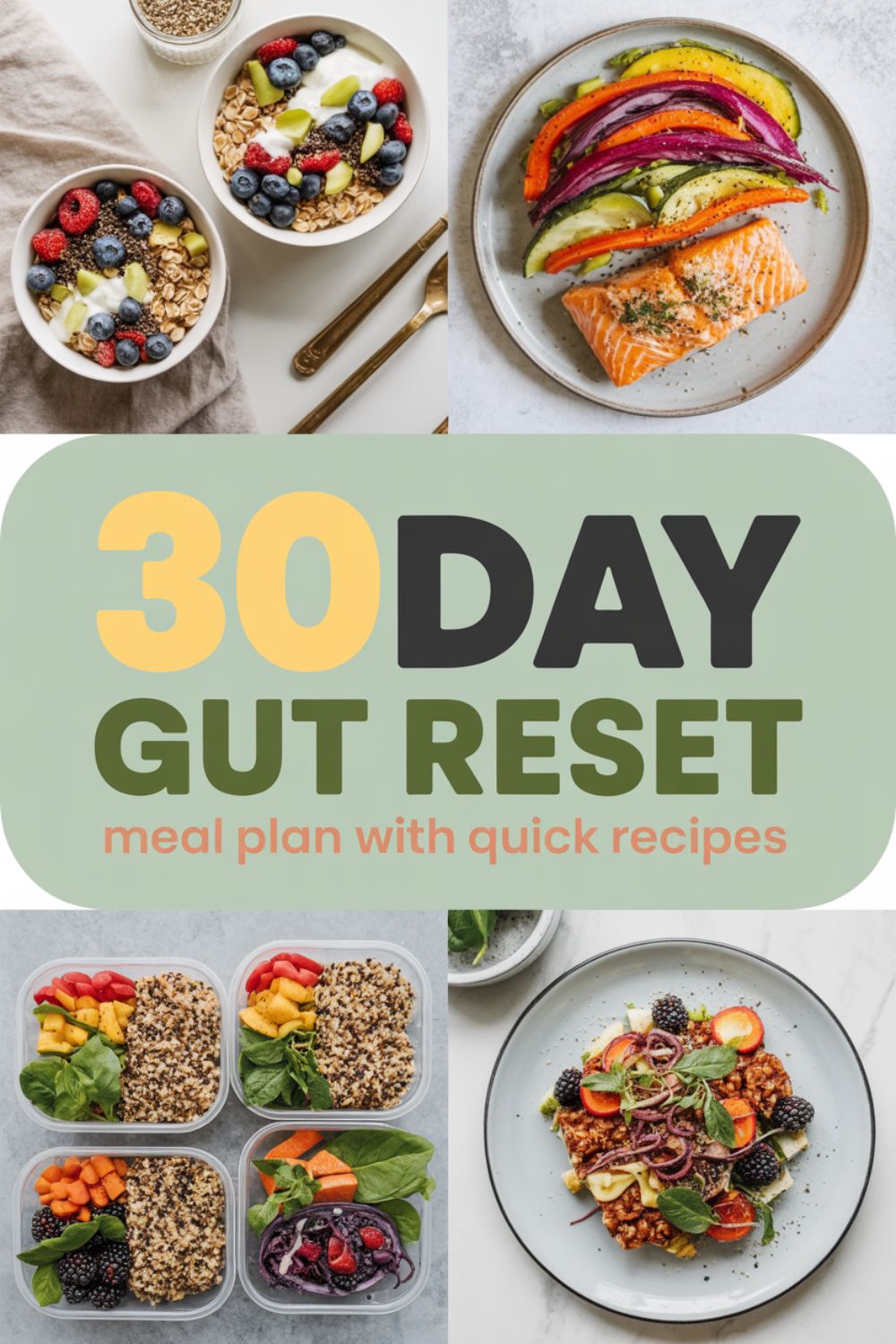
Breakfast: Overnight oats with chia seeds, blueberries, and a dollop of Greek yogurt. The oats provide fiber, chia adds omega-3s, and the yogurt brings probiotics. Get Full Recipe.
Lunch: Quinoa bowl with roasted vegetables, chickpeas, and tahini dressing. This is loaded with plant-based protein and prebiotic fiber from the chickpeas and veggies.
Dinner: Baked salmon with roasted sweet potato and sautéed kale. Salmon provides anti-inflammatory omega-3s, sweet potato offers resistant starch that feeds beneficial bacteria, and kale delivers vitamins and fiber.
Snacks: Apple slices with almond butter, or a handful of walnuts with some dark chocolate. Keep it simple.
For more breakfast inspiration that won’t bore you to tears, you might want to check out these high-protein breakfast bowls or try this probiotic smoothie bowl that’s become a morning staple in my house.
“I was skeptical at first, but after following this gut reset plan for 30 days, my chronic bloating disappeared. I have so much more energy now, and my skin cleared up too. Sarah from our community tried this approach and lost 15 pounds in three months without even trying—she just felt better and made better choices naturally.” — Real feedback from our recipe community
Quick Recipe: 5-Minute Probiotic Smoothie
Blend 1 cup kefir, handful of spinach, half a banana, 1/2 cup frozen berries, 1 tablespoon ground flaxseed, and a scoop of vanilla protein powder. That’s it. You’ve got probiotics, prebiotics, fiber, and protein all in one glass.
I make this almost every morning using this high-speed blender that actually blends the spinach completely smooth—no chunks floating around. Trust me, nobody wants to chew their smoothie.
Week 2: Building Momentum
By week two, you should be feeling noticeably different. Less afternoon crashes, more regular digestion, maybe even sleeping better. Your gut bacteria are starting to shift toward a healthier balance.
Adding More Variety
This week, focus on eating at least 30 different plant foods. Sounds like a lot, but it’s easier than you think. Herbs and spices count. That means your morning smoothie with five ingredients already gets you partway there.
Sample lunch this week: Mediterranean chickpea salad with cucumbers, tomatoes, red onion, parsley, mint, and lemon-tahini dressing. Get Full Recipe. Toss everything in a large glass meal prep container and you’ve got lunch for three days.
Speaking of Mediterranean flavors, if you’re into that vibe, check out this Mediterranean grain bowl or these herb-crusted chicken thighs that pair perfectly with roasted vegetables.
Meal Prep Essentials Used in This Plan
After testing dozens of kitchen tools and products, here’s what actually makes gut-healthy meal prep easier:
- Glass meal prep containers set — I’ve been using these for two years and they still look brand new. Microwave-safe, dishwasher-friendly, and they don’t stain like plastic.
- Instant Pot pressure cooker — Makes batch-cooking grains and legumes ridiculously easy. Your chickpeas and quinoa will be done in half the time.
- Quality chef’s knife — Chopping vegetables becomes way less tedious when your knife is actually sharp. This one changed my meal prep game.
- 30-Day Gut Reset Meal Plan PDF — Complete meal plans with shopping lists and recipes (digital download)
- Gut Health Recipe Collection eBook — 100+ quick recipes focused on digestive health
- Weekly Meal Prep Guide — Step-by-step meal prep strategies to save time
Want more support? Join our WhatsApp community where we share daily tips, recipes, and answer questions about gut health.
Week 3: Fine-Tuning Your Approach
Three weeks in, you’ve probably figured out what works for your body. Maybe you discovered that raw cruciferous vegetables don’t sit well with you (totally common), or that you feel amazing after eating lentils. Listen to these signals.
Dealing with Common Challenges
Let’s be real—nobody’s perfect. Maybe you had a rough week and ordered takeout three times. It happens. The gut reset isn’t about perfection; it’s about consistency over time. One bad meal won’t undo all your progress.
If you’re struggling with time, focus on simple meals. A bowl of Greek yogurt with berries and nuts is a legitimate meal. So is a sweet potato topped with black beans, salsa, and avocado. Keep canned beans and frozen vegetables stocked in your pantry—they’re nutritionally on par with fresh options.
Pro Tip: Roast a massive sheet pan of vegetables every Sunday. Toss them with olive oil, salt, and whatever spices you’re feeling. They’ll last all week and can be added to any meal.
Sample Week 3 Dinner: One-Pan Turmeric Chicken
Season chicken thighs with turmeric, cumin, garlic, and black pepper. Arrange on a sheet pan with sweet potato chunks, bell peppers, and red onion. Roast at 400°F for 35 minutes. Done. The turmeric is anti-inflammatory, the vegetables provide fiber and prebiotics, and cleanup takes five minutes because it’s all on one pan.
I use this rimmed baking sheet for everything. It’s heavy-duty, doesn’t warp, and the nonstick coating actually works without any weird chemicals.
Looking for more one-pan wonders? Try this sheet pan salmon dinner or these roasted vegetable medleys that make weeknight cooking absurdly simple.
Week 4: Making It Sustainable
Final week. By now, eating gut-healthy foods should feel pretty natural. You’re not white-knuckling through meals or counting down until the reset is over—you’re just eating food that makes you feel good.
Building Your Long-Term Strategy
The real magic happens when you stop viewing this as a temporary reset and start seeing it as your new normal. That doesn’t mean you never eat pizza again (please, live a little). It means that most of the time, you’re choosing foods that support your gut health because you’ve experienced the difference.
Research from Mayo Clinic gastroenterology experts emphasizes that maintaining gut health is about consistent dietary patterns rather than short-term interventions. The 30 days taught you what works—now just keep doing it.
What to Keep Doing After the Reset
- Eat fermented foods regularly: Aim for at least one serving daily. Your morning yogurt, afternoon kombucha, or kimchi with dinner all count.
- Prioritize fiber: Keep loading up on vegetables, whole grains, and legumes. Your gut bacteria literally depend on it.
- Stay hydrated: Water helps fiber do its job and keeps everything moving smoothly. Drink up.
- Don’t stress about perfection: The 80/20 rule applies here. Eat well most of the time, and your gut will forgive the occasional indulgence.
Tools & Resources That Make Cooking Easier
These are the products and resources that keep me consistent with gut-healthy eating:
- Spiralizer for vegetable noodles — Makes eating more vegetables way more fun. Zucchini noodles with marinara? Yes please.
- High-quality blender — For smoothies, soups, and homemade nut butters. This is an investment that pays off.
- Food processor — Chops vegetables in seconds, makes hummus from scratch, and basically does all the annoying prep work for you.
- Gut-Friendly Snack Ideas eBook — 50+ quick snack recipes that support digestive health
- Fermentation Starter Kit Guide — Learn to make your own sauerkraut, kimchi, and kombucha at home
- Meal Planning Templates — Printable planners and grocery lists designed for gut health
Connect with others on the same journey in our recipe exchange WhatsApp group where members share their favorite gut-friendly meals and tips.
Quick Recipes to Keep in Your Rotation
Gut-Healing Golden Milk
This anti-inflammatory drink is perfect before bed. Warm 1 cup unsweetened almond milk with 1 teaspoon turmeric, 1/2 teaspoon cinnamon, a pinch of black pepper (helps turmeric absorption), and a drizzle of honey. The turmeric reduces inflammation, and the warm milk is naturally soothing. Get Full Recipe.
15-Minute Miso Soup with Greens
Bring 4 cups water to a simmer with sliced mushrooms and chopped bok choy. Remove from heat, whisk in 2 tablespoons white miso paste, add cubed tofu and sliced green onions. The miso provides probiotics, and the whole thing takes less time than ordering takeout.
If you love simple, warming soups like this, you’ll probably also enjoy this healing bone broth recipe or these vegetable soup variations that never get old.
No-Cook Gut-Friendly Lunch Bowl
Layer mixed greens, canned chickpeas (rinsed), cherry tomatoes, cucumber, avocado, and hemp hearts. Dress with olive oil, lemon juice, and za’atar. No cooking required, and you’ve got fiber, protein, healthy fats, and prebiotics all in one bowl.
Frequently Asked Questions
Can I drink coffee during the gut reset?
Yes, coffee in moderation is fine. In fact, coffee contains polyphenols that can actually benefit your gut bacteria. Just skip the excess sugar and artificial creamers. Black coffee or with a splash of unsweetened almond milk works great. If coffee bothers your stomach, try switching to green tea or matcha.
What if I don’t like fermented foods?
Start small and experiment with different options. Yogurt is the most mild introduction to fermented foods. If that’s still not your thing, focus on getting plenty of prebiotic fiber—your existing gut bacteria will multiply when properly fed. You can also consider a probiotic supplement, though whole foods are generally preferable.
How much water should I drink during the reset?
Aim for at least 8-10 glasses daily, especially since you’re increasing fiber intake. Water helps fiber move through your digestive system smoothly. If you’re not used to drinking this much, work up gradually. I keep a large water bottle on my desk and just refill it throughout the day.
Is this plan safe if I have IBS or other digestive conditions?
While these are generally gut-healthy foods, everyone’s digestive system is different. If you have diagnosed IBS, Crohn’s, or other conditions, talk to your doctor or a registered dietitian before making major dietary changes. Some high-fiber or fermented foods might need to be introduced more gradually for sensitive digestive systems.
Can I follow this plan if I’m vegetarian or vegan?
Absolutely. In fact, plant-based diets are naturally high in the fiber that gut bacteria love. Just swap animal proteins for legumes, tofu, tempeh, or other plant-based options. You’ll get plenty of prebiotics and can still include fermented foods like sauerkraut, kimchi, and kombucha. The principles remain the same.
The Bottom Line on Gut Resets
Here’s what I’ve learned after doing this myself and helping others through it: your gut health isn’t about following rigid rules or eliminating entire food groups. It’s about consistently choosing foods that nourish your microbiome and paying attention to how your body responds.
This 30-day reset isn’t magic. It’s just giving your body what it actually needs—fiber, probiotics, whole foods, and time to adjust. The “magic” comes from how much better you feel when your gut is functioning properly. Better energy, clearer thinking, less bloating, improved mood—these aren’t gimmicks. They’re the natural result of a healthy digestive system.
Will you fall off the wagon sometimes? Of course. Will one pizza night ruin everything? Absolutely not. The key is having a foundation of gut-healthy habits that you can return to whenever you need. This reset teaches you what that foundation looks like.
IMO, the best part about prioritizing gut health is that it’s not restrictive—it’s actually the opposite. You end up eating more variety, trying new foods, and discovering that healthy eating doesn’t have to be boring or complicated. You’re just choosing better ingredients and preparing them in ways that support your body.
So start next Sunday. Clear out the processed stuff, stock your kitchen with whole foods, and commit to 30 days of eating in a way that serves your gut health. Your digestive system has been putting up with a lot—give it this month to recover, and I guarantee you’ll notice the difference.