Anti-Inflammatory Meal Prep — Full Week Guide (Free Printable)
Anti-Inflammatory Meal Prep — Full Week Guide (Free Printable)
Let’s be honest — most of us don’t wake up on a Monday thinking, “Yes, today I will eat a perfectly balanced, inflammation-fighting meal.” We wake up, grab whatever’s easiest, and wonder why we feel sluggish by noon. Sound familiar? That’s exactly why anti-inflammatory meal prep exists, and why once you try it, you genuinely won’t go back.
I started meal prepping with an anti-inflammatory focus after dealing with joint pain and constant fatigue that my doctor linked to chronic low-grade inflammation. Within three weeks of changing what I ate, I felt like a different person. Not superhuman — just functional. And that felt like a miracle.
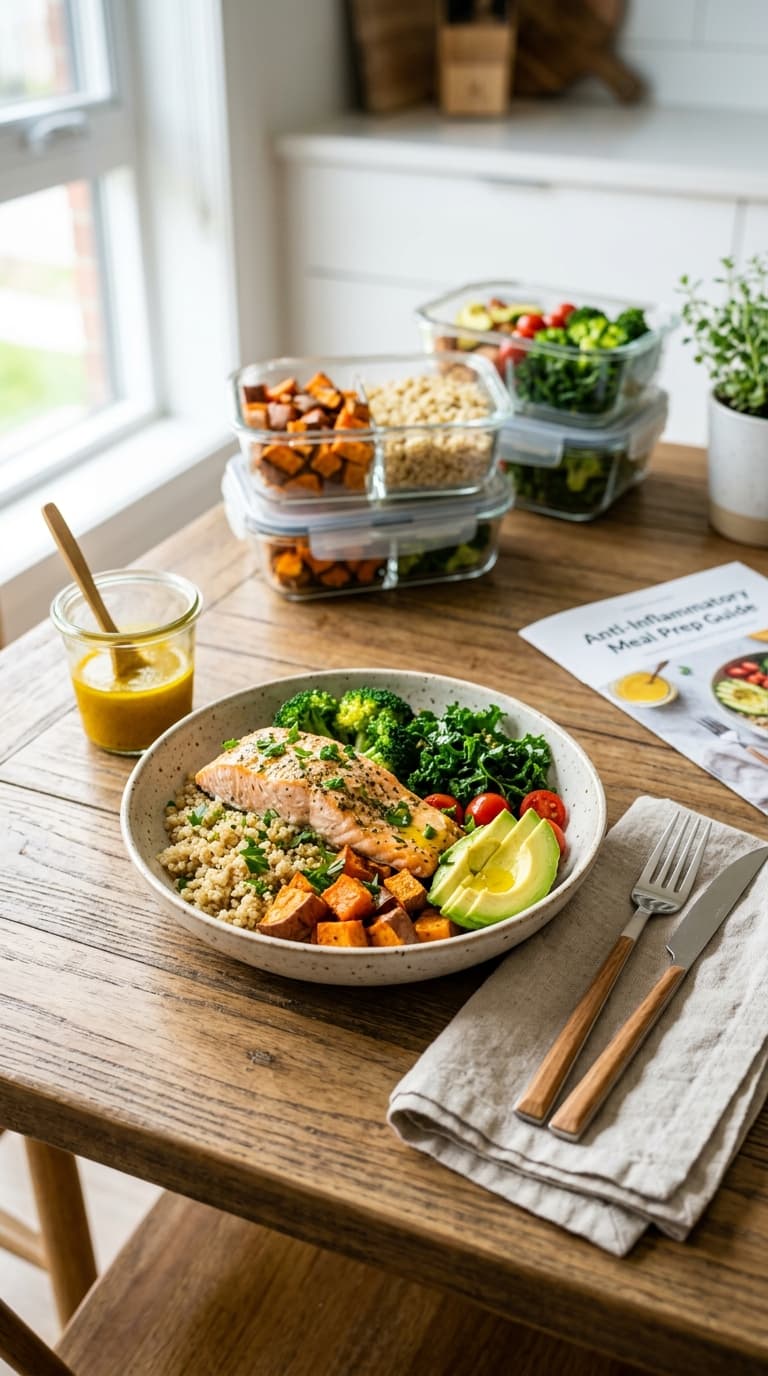
This full week guide covers everything: what to eat, what to avoid, a day-by-day breakdown, and yes, a free printable at the end. Let’s get into it.
What “Anti-Inflammatory Eating” Actually Means
Before we talk meal prep logistics, let’s clear something up. Anti-inflammatory eating isn’t a trendy diet with a celebrity face on it. It’s a way of choosing foods that help your body calm down its internal stress response rather than constantly firing it up.
Chronic inflammation has been linked to everything from heart disease and diabetes to skin issues and brain fog. The food you eat either pours fuel on that fire or helps put it out. Pretty simple concept, honestly.
Foods That Fight Inflammation
- Fatty fish (salmon, sardines, mackerel) — loaded with omega-3s
- Leafy greens (spinach, kale, arugula) — packed with antioxidants
- Berries (blueberries, strawberries, cherries) — high in polyphenols
- Olive oil — the Mediterranean diet’s MVP
- Turmeric and ginger — nature’s anti-inflammatory duo
- Nuts and seeds (walnuts, flaxseeds, chia seeds)
- Whole grains (quinoa, brown rice, oats)
- Legumes (lentils, chickpeas, black beans)
Foods That Trigger Inflammation
- Refined sugars and anything ultra-processed
- White bread, white rice, and refined carbs
- Industrial seed oils (canola, soybean, corn oil in excess)
- Processed meats and fried foods
- Excess alcohol
FYI, you don’t have to be perfect. Cutting back on the bad stuff while adding more of the good stuff is how most people see real results.
Why Meal Prep Is the Secret Weapon Here
Here’s the thing — knowing which foods fight inflammation is the easy part. Actually eating them consistently when you’re tired, busy, or staring at a half-empty fridge at 7 PM? That’s where most people fall apart.
Meal prep solves this problem completely. When your fridge is already stocked with ready-to-eat anti-inflammatory meals, you make better choices by default. No thinking required. It’s like removing the decision entirely, and that’s a beautiful thing.
If you’re new to the concept or want to nail your weekly structure first, check out this 7-day meal prep plan that actually works — it’s a solid starting point before layering in the anti-inflammatory focus.
Your Anti-Inflammatory Grocery List
Before you prep anything, you need a solid haul. Here’s what to grab for a full week:
Proteins
- Wild-caught salmon (2 lbs)
- Boneless chicken thighs or breast (2 lbs)
- Canned sardines or mackerel (3–4 cans)
- Eggs (1 dozen)
- Chickpeas and lentils (dried or canned)
Vegetables
- Baby spinach and kale (large bags)
- Broccoli and cauliflower (2 heads each)
- Sweet potatoes (4–5 medium)
- Zucchini and bell peppers (3–4 each)
- Cherry tomatoes (2 pints)
Grains & Legumes
- Quinoa (2 cups dry)
- Brown rice or wild rice (2 cups dry)
- Rolled oats (for breakfasts)
- Black beans (2 cans)
Fats & Extras
- Extra virgin olive oil
- Avocados (4–5)
- Walnuts and almonds
- Chia seeds and flaxseeds
- Blueberries and strawberries (fresh or frozen)
Spices That Pull Double Duty
- Turmeric (buy the big jar — you’ll use it constantly)
- Ginger (fresh and ground)
- Garlic (fresh bulbs)
- Black pepper (essential — it activates turmeric’s curcumin by 2000%)
- Cinnamon, cumin, paprika
The Full Week Anti-Inflammatory Meal Plan
Here’s the complete breakdown. This is built around a Sunday prep session (about 2–3 hours) that sets you up for the entire week.
Monday
Breakfast: Overnight oats with chia seeds, blueberries, and a sprinkle of cinnamon
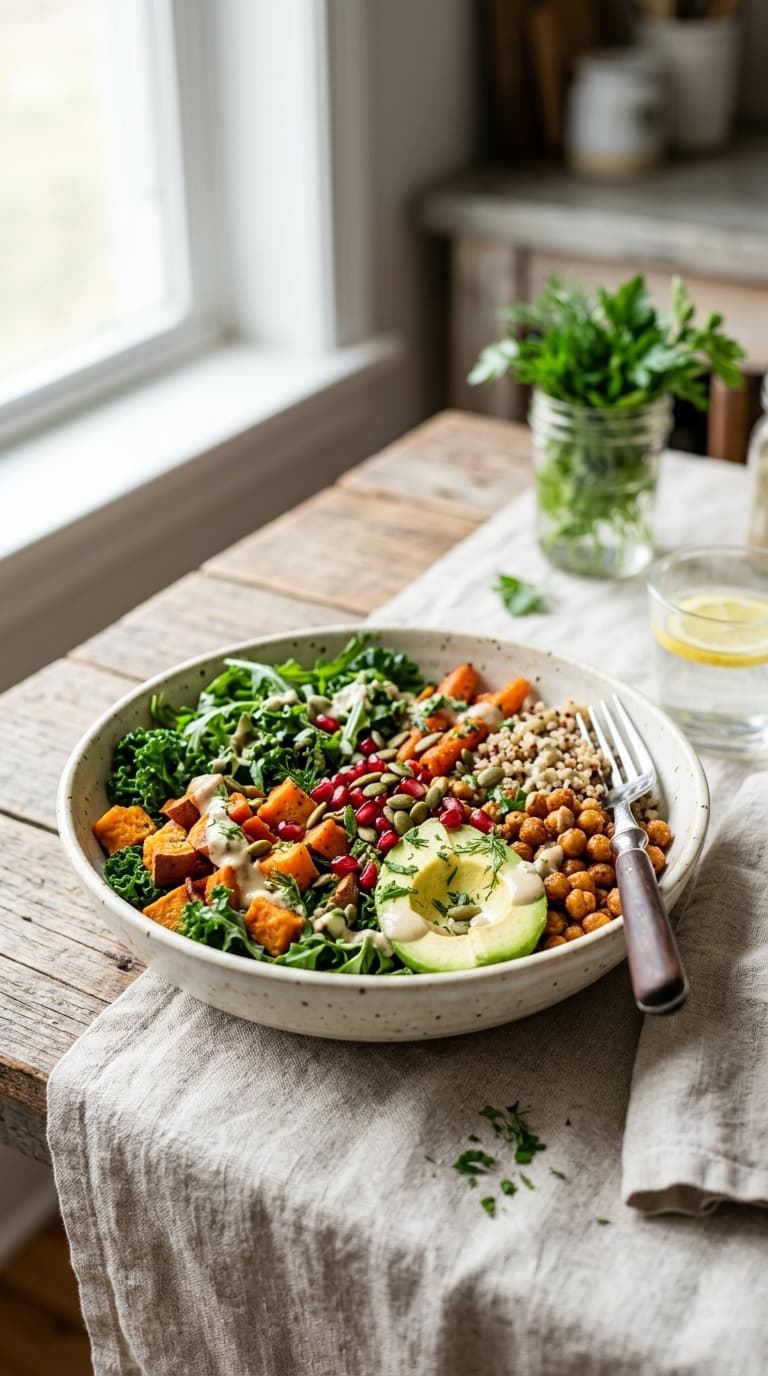
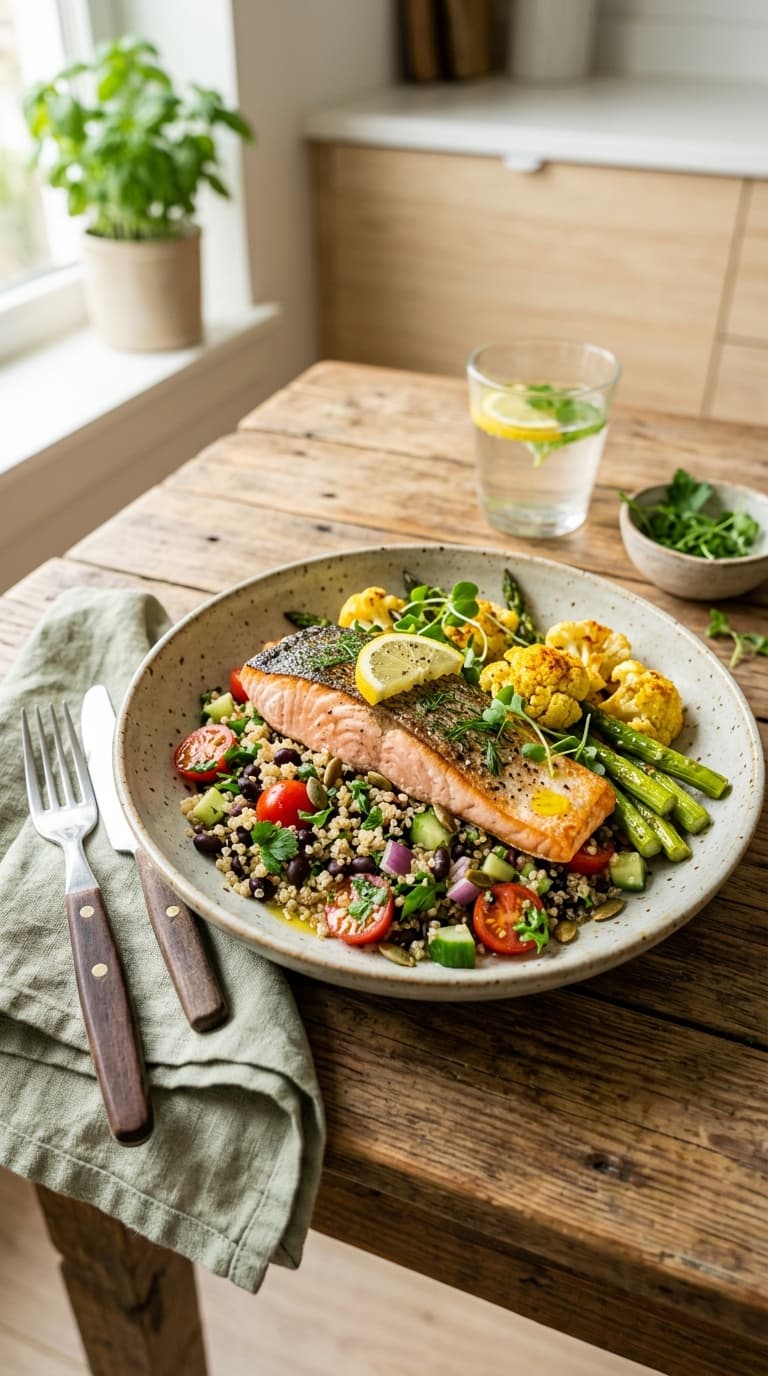
Lunch: Quinoa bowl with roasted chickpeas, kale, cherry tomatoes, and a lemon-tahini drizzle
Dinner: Baked salmon with roasted broccoli and sweet potato wedges
Snack: A small handful of walnuts + a few strawberries
Tuesday
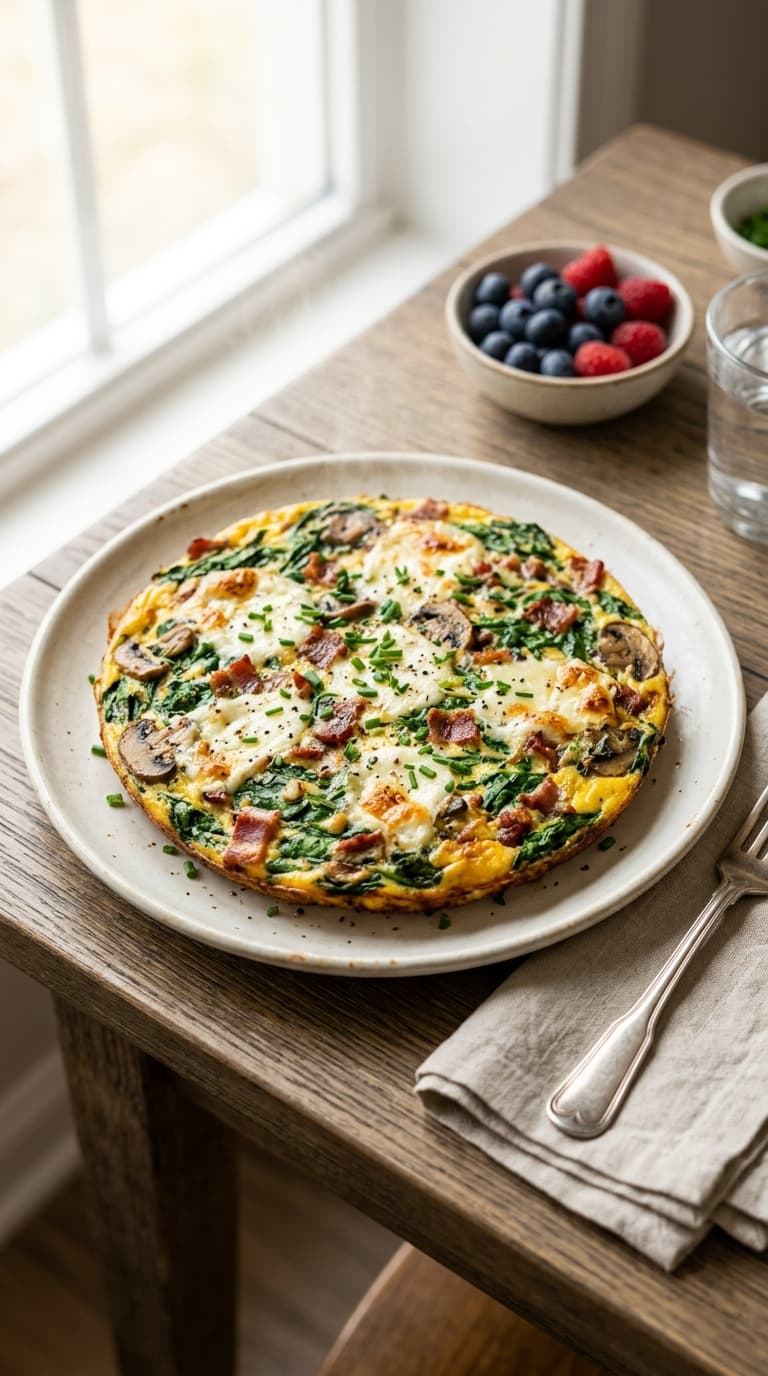
Breakfast: Scrambled eggs with spinach and turmeric, served on a slice of whole-grain toast
Lunch: Leftover salmon flaked over brown rice with avocado slices and drizzle of olive oil
Dinner: Chicken thighs baked with garlic and herbs, served with roasted zucchini and a side of lentil soup
Snack: Chia pudding prepped the night before
Wednesday
Breakfast: Smoothie bowl — blended frozen berries, banana, spinach, flaxseed, and almond milk
Lunch: Lentil and vegetable soup (batch-cooked Sunday) with whole-grain pita
Dinner: Turmeric chicken stir-fry with bell peppers, broccoli, and brown rice
Snack: Apple slices with almond butter
Thursday
Breakfast: Overnight oats (batch from Sunday — just grab and go)
Lunch: Big green salad with canned sardines, avocado, cherry tomatoes, olives, and olive oil dressing
Dinner: Cauliflower rice stir-fry with black beans, bell peppers, and a ginger-garlic sauce
Snack: A small bowl of mixed berries
Friday
Breakfast: Eggs cooked your way + sautéed kale with garlic and a pinch of red pepper flakes
Lunch: Quinoa and roasted veggie bowl with leftover chickpeas and tahini
Dinner: Baked salmon (second batch — prep two portions on Sunday) with wild rice and steamed broccoli
Snack: Walnuts + dark chocolate (70%+ cacao — yes, this counts :))
Saturday
Breakfast: Smoothie — frozen cherries, spinach, chia seeds, ginger, turmeric, oat milk
Lunch: Leftover lentil soup heated up, topped with a squeeze of lemon and fresh parsley
Dinner: One-pan roasted chicken thighs with sweet potatoes, zucchini, and cherry tomatoes
Snack: Chia pudding or a piece of fruit with nuts
Sunday (Reset Day)
Breakfast: A proper sit-down meal — veggie omelette with avocado and fresh tomato
Lunch: Clean out the fridge — mix and match whatever’s left into a grain bowl
Dinner: Something simple and nourishing — homemade lentil soup or a warm chickpea stew to kick off the next week
How to Structure Your Sunday Prep Session
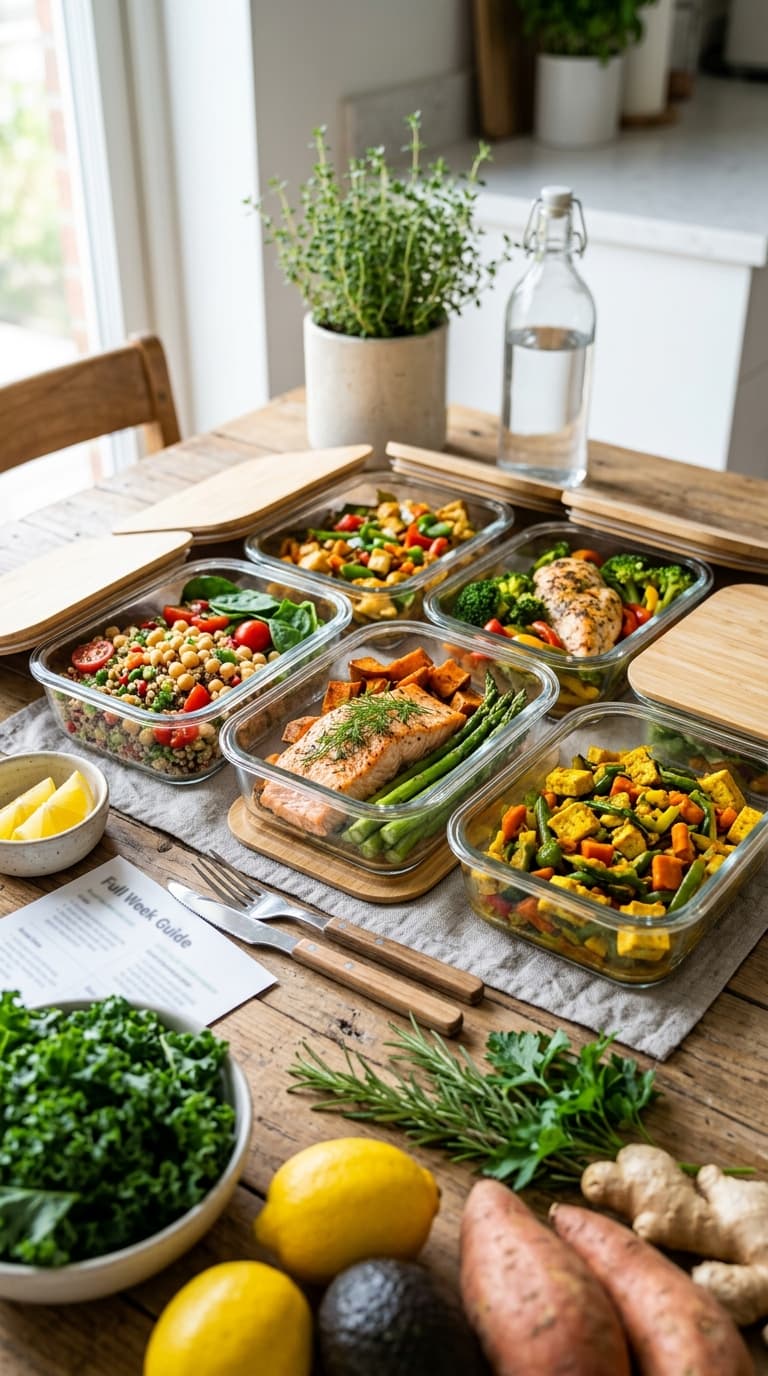
This is where the magic happens. Block off 2.5 to 3 hours on Sunday and work through this order:
Step 1 — Start your grains first (they take the longest)
- Cook 2 cups quinoa and 2 cups brown rice simultaneously if you have two pots
Step 2 — Get everything in the oven
- Roast sweet potatoes, broccoli, cauliflower, and zucchini on sheet pans
- Bake one batch of salmon and one batch of chicken thighs
Step 3 — Stovetop work
- Cook a big pot of lentil soup
- Prep your chia pudding jars (3–4 at once)
- Overnight oats can be assembled in under 10 minutes
Step 4 — Wash and chop raw veg
- Prep all your salad greens, slice bell peppers, portion out snacks
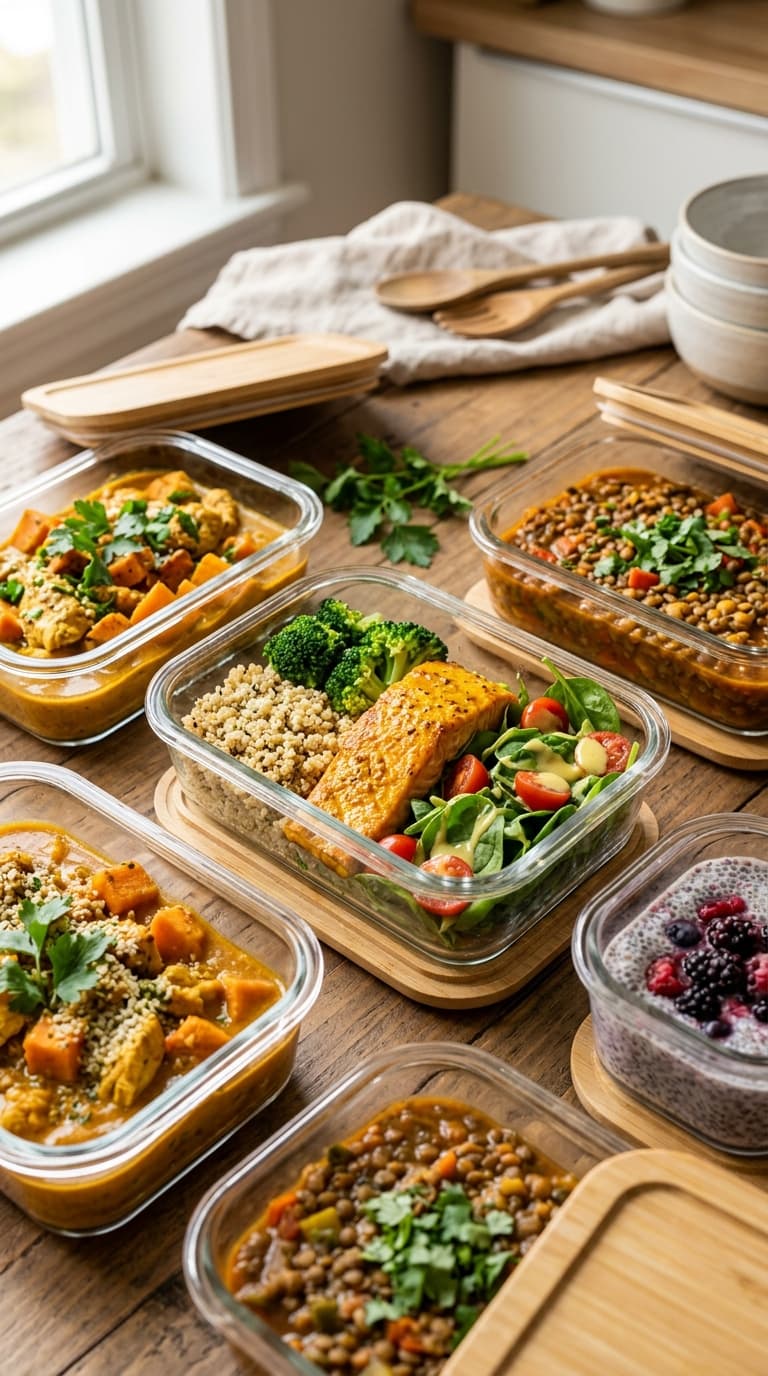
Step 5 — Store everything strategically
- Label containers with the day or meal name
- Keep proteins and grains separate so you can mix and match
If you’re also trying to manage calories while doing this, you might find this 7-day healthy meal prep guide really useful alongside this one — it overlaps well.
Anti-Inflammatory Meal Prep Tips That Actually Help
Batch cook your proteins. Cook all your chicken and salmon in one oven session. You can flavor them differently — one pan with turmeric and garlic, another with lemon and herbs — so meals don’t feel repetitive.
Make a big pot of something soupy. Lentil soup, chickpea stew, or even a simple vegetable broth-based soup keeps incredibly well for 5–6 days and works as a lunch or dinner fallback.
Prep your smoothie ingredients in bags. Portion frozen berries, spinach, and seeds into individual bags and freeze them. Breakfast takes 90 seconds. IMO, this is one of the best prep hacks nobody talks about enough.
Use turmeric in everything. Scrambled eggs, roasted vegetables, rice, soups, smoothies — a pinch goes a long way. Always pair it with black pepper. Always.
Don’t overthink the snacks. Walnuts, berries, and dark chocolate require zero prep. Stop overcomplicating it :/
Making It Work on a Budget
Anti-inflammatory eating has this reputation for being expensive. And sure, wild-caught salmon isn’t cheap. But here’s the reality — canned sardines and mackerel are among the most anti-inflammatory foods on the planet and cost around $2 a can. Lentils and chickpeas are basically free. Frozen berries are just as nutritious as fresh ones.
If you’re working with a tight grocery budget, this 7-day cheap meal prep that saves money is a great resource that proves healthy eating doesn’t have to break the bank.
Focus your budget on: olive oil (buy a good one), fatty fish 2x per week, and organic leafy greens if possible. Everything else can be budget-friendly.
The Free Printable Weekly Planner
Here’s your printable breakdown — save this, print it, slap it on your fridge.
ANTI-INFLAMMATORY WEEK AT A GLANCE
| Day | Breakfast | Lunch | Dinner | Snack |
|---|---|---|---|---|
| Monday | Overnight oats + berries | Quinoa chickpea bowl | Baked salmon + sweet potato | Walnuts + strawberries |
| Tuesday | Turmeric eggs on toast | Salmon rice bowl | Herb chicken + lentil soup | Chia pudding |
| Wednesday | Berry smoothie bowl | Lentil soup + pita | Turmeric chicken stir-fry | Apple + almond butter |
| Thursday | Overnight oats | Sardine green salad | Cauliflower black bean stir-fry | Mixed berries |
| Friday | Kale + eggs | Quinoa veggie bowl | Baked salmon + wild rice | Walnuts + dark chocolate |
| Saturday | Ginger-turmeric smoothie | Lentil soup | One-pan roasted chicken | Chia pudding |
| Sunday | Veggie omelette | Fridge clean-out bowl | Chickpea stew | Fruit + nuts |
Sunday Prep Checklist:
- Cook quinoa and brown rice
- Bake salmon (double batch)
- Bake chicken thighs
- Roast vegetables (2–3 sheet pans)
- Make big pot of lentil soup
- Prep chia pudding jars (4)
- Assemble overnight oats (4 jars)
- Wash and chop salad greens
- Portion snacks into containers
Pairing This With Your Broader Health Goals
Anti-inflammatory eating works beautifully alongside other health goals — weight management, better energy, improved digestion. If fat loss is part of the picture, these high-volume, low-calorie meals pair perfectly with an anti-inflammatory approach because many of the foods overlap heavily.
And if you’re someone who loves having a longer-term structure, a 21-day weight loss meal prep plan can help you build the anti-inflammatory habit over three weeks until it genuinely becomes automatic.
A Few Final Thoughts
Here’s the truth — anti-inflammatory meal prep isn’t complicated. It’s just intentional. You’re choosing foods that work with your body instead of constantly making it fight harder than it needs to.
The first week feels like effort. The second week feels easier. By week three, it’s just how you eat. And that shift? Worth every Sunday afternoon spent in the kitchen.
Start with this guide, use the printable, and adjust as you go. Your future self — the one with more energy, less brain fog, and joints that don’t protest every time you climb stairs — will genuinely thank you.
Now go batch-cook some salmon and feel smug about it. You’ve earned it. 🙂